Bolivia
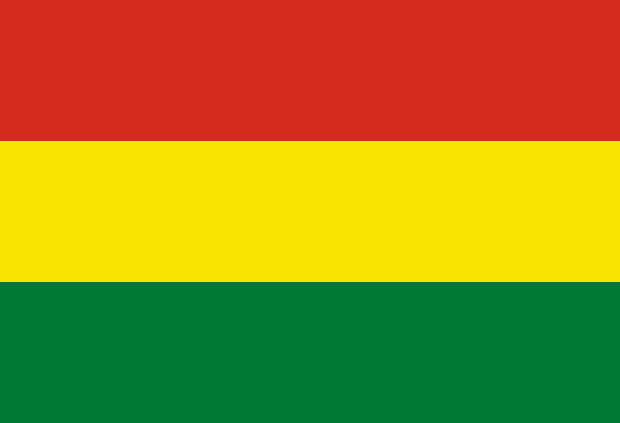
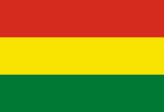
Country flag available in this resolutions
| Icon 32x22 |  |
| Icon 88x60 |  |
Bolivia
Bolivia: A Land of Contrasts and Resilience
Bolivia, officially known as the Plurinational State of Bolivia, is a landlocked country situated in the heart of South America, a region often characterized by its dramatic geographical diversity and rich cultural heritage. Its name honors Simón Bolívar, a pivotal figure in the continents fight for independence from Spanish colonial rule. Bolivia is a nation defined by its stark contrasts, from the towering Andes mountains in the west to the vast, humid lowlands of the Amazon basin in the east. This geographical dichotomy profoundly influences its demographics, economy, and history, shaping a unique national identity.
The demographic landscape of Bolivia is as varied as its terrain. The country is home to a significant indigenous population, comprising over 60% of its inhabitants, making it one of the most ethnically diverse nations in South America. These indigenous groups, including the Quechua, Aymara, and Guarani, have maintained their distinct languages, traditions, and cultural practices, contributing immensely to Bolivias vibrant cultural tapestry. The remaining population is primarily of mixed European and indigenous ancestry (mestizo) or of European descent. This rich ethnic mix is reflected in the countrys linguistic diversity, with Spanish being the official language, but with numerous indigenous languages also recognized and spoken. The population is largely concentrated in the Andean highlands, particularly in cities like La Paz, the administrative capital, and Sucre, the constitutional capital. However, there is a growing urban migration towards the eastern lowlands, driven by economic opportunities in the agricultural and resource sectors.
Bolivias economy is a complex interplay of its natural resources and the challenges of its landlocked status. Historically, the countrys economy has been heavily reliant on the extraction of natural resources, particularly minerals. Silver was a major export during the colonial era, and in the 20th century, tin became a significant commodity. More recently, Bolivia has emerged as a major producer of natural gas, which has become a crucial export, particularly to neighboring Brazil and Argentina. The agricultural sector is also vital, with the eastern lowlands being a significant producer of soybeans, corn, and other crops. However, Bolivia faces persistent challenges, including high levels of poverty, income inequality, and a significant informal economy. Its landlocked geography presents logistical hurdles for trade, increasing transportation costs and impacting its competitiveness in global markets. Recent governments have focused on diversifying the economy, investing in infrastructure, and promoting sustainable development, but progress has been gradual.
The history of Bolivia is a saga of conquest, independence, and ongoing social and political transformation. The region was once the heartland of the Tiwanaku civilization, a sophisticated pre-Inca culture. Later, it became a vital part of the Inca Empire, known as Kollasuyu. The arrival of the Spanish conquistadors in the 16th century marked a brutal turning point, leading to centuries of colonial rule and the exploitation of its rich silver mines, most notably Potosí, which became one of the wealthiest cities in the world, albeit at a tremendous human cost. Independence was finally achieved in 1825, led by Simón Bolívar and Antonio José de Sucre. The post-independence period was characterized by political instability, frequent coups, and territorial losses, most notably the War of the Pacific (1879-1884), which resulted in Bolivia losing its access to the Pacific Ocean to Chile. The 20th century saw periods of military rule interspersed with democratic governments, and significant social movements, particularly those advocating for indigenous rights and land reform. The election of Evo Morales in 2006 marked a historic shift, as he was the countrys first indigenous president, ushering in an era of significant social and economic reforms, including the nationalization of key industries and a new constitution that recognized Bolivia as a plurinational state. While Morales presidency brought about considerable changes and empowerment for indigenous communities, it also faced challenges and controversies, culminating in his resignation in 2019 amid protests and political turmoil.
The geography of Bolivia is a defining characteristic, presenting extreme variations in altitude and climate. The western part of the country is dominated by the Andes mountain range, which forms a vast plateau known as the Altiplano. This high-altitude region, averaging over 3,700 meters (12,000 feet) above sea level, is home to some of the worlds highest cities, including El Alto. The Altiplano is characterized by its arid climate, dramatic mountain peaks, and stunning salt flats, such as the Salar de Uyuni, the worlds largest salt flat, a surreal landscape of dazzling white that stretches to the horizon. To the east of the Andes lie the tropical lowlands, comprising the Amazon basin and the Gran Chaco. These regions are characterized by dense rainforests, extensive river systems, and a hot, humid climate. This geographical contrast creates distinct ecosystems and influences the lifestyles and economic activities of the people who inhabit them. The highlands are traditionally associated with mining, potato cultivation, and herding of llamas and alpacas, while the lowlands are dominated by agriculture, cattle ranching, and the extraction of oil and gas.
Bolivias political landscape has been shaped by its turbulent history and its ongoing struggle to reconcile its diverse ethnic and social groups. The country has a presidential republic system, with a president serving as both head of state and government. The legislature is bicameral, consisting of the Chamber of Senators and the Chamber of Deputies. The transition to democracy in the late 20th century was a significant achievement, but political stability has remained a persistent challenge. The country has witnessed numerous social movements and protests, often driven by issues of economic inequality, resource management, and the rights of indigenous populations. The concept of plurinationalism, enshrined in the 2009 constitution, reflects an attempt to address historical injustices and recognize the rights and autonomy of Bolivias diverse indigenous nations. This has led to significant reforms in governance and land rights, aiming to foster a more inclusive and equitable society.
In conclusion, Bolivia is a nation of profound beauty and complexity. Its dramatic geography, rich indigenous heritage, and a history marked by both exploitation and resilience have shaped a unique national identity. While facing ongoing economic and social challenges, Bolivia continues to strive for progress, seeking to harness its abundant natural resources responsibly and build a more inclusive and just society for all its citizens. The land of contrasts remains a captivating destination for those seeking to understand the intricate tapestry of South American culture and history.
Information about country Bolivia
Automated text translation, excuse errors, please!
Informations are from the publication CIA The World Factbook.
Country Bolivia is situated in a location / continent South America. Bolivia has an area of 1 098 581 km2 and 10 290 003 residents. The highest point has a height 6 542 above sea level. and it is called Nevado Sajama. The lowest point is located at the level of 90 above sea level and it is named Rio Paraguay. System of government is republic and the date of independence 6th August 1825. The capital city is La Paz (administrative capital). Bolivia has the international abbreviation BL.
Bolivia - economy
Total gross domestic product (GDP) is 51 560 000 000 $. Total gross domestic product per capita in purchasing power parity is 4 900 $. GDP grows by 5.10 % a year. Inflation (consumer price index) is equal to 9.90 % a year. Bolivia have 4 689 000 working-age population (from a total population 10 290 003 people). Unemployment is at 5.50 %. Bolivia issued 4.80 % GDP to healt care and 1,30 % GDP to army. The public debt of the country is 36.60 % GDP. The total amount of foreign debt is 5 491 000 000 USD.
Bolivia - transport and telecommunications
Bolivia has 16 138 km of roads, 3 652 km of railway lines and 865 airports. The total length of waterways (navigable rivers, canals, etc.) is 10 000 km. There is registered 18 ships.
Number of active mobile phones (sim card) in the country Bolivia is 8 353 000. Number of active fixed telephone lines is 879 800. Bolivia has 1 103 000 internet users, who have the available 167 769 Internet connections. Bolivia has been assigned a domain first Choose range .bo.
Bolivia - demography
As suggested above, Bolivia has 10 290 003 people. Population growth is in the amount 1.66 % per year. Number of children born per 1000 population per year is 24.24.Every mother has average 2.93 children. The infant mortality rate is 40.94 and maternal mortality 180.00 deaths per 100,000 births. Average estimated life expectancy makes 67.90 years. Mortality is 6.76 people per 1000 population per year.
Bolivia - energetics
Bolivia consumes a year 6 301 000 000 kWh of electricity. Annual electricity production is 6 611 000 000 kWh in power plants with a total installed electrical capacity 1 539 000 kW. Bolivia exports 0 kWh and imports 0 kWh of electricity per year Energy mix of power generation is as follows: fossil fuels: 67.6 %, nuclear energy: 0 %, renewable: 0.6 %, hydropower: 31.7 %. The country Bolivia is harvested annually 48 570 barrels of oil.
Flags
World flags
World flags
Flags of the World countries
Dále doporučujeme:
Doporučené odkazyOdkazy na zajímavé weby
Odkazy na partnerské weby
Odkazy na užitečné webové stránky
Zajímavé internetové odkazy
 |
 |
 |
 |
 |
 |
 |
 |
 |
 |
 |
 |
 |
 |
 |
 |
 |
 |
 |