Brazil
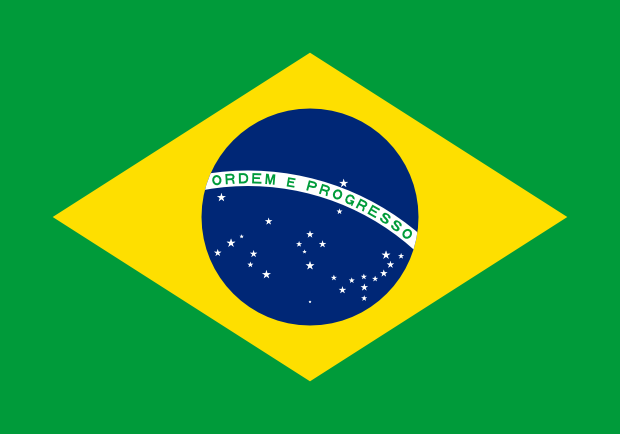
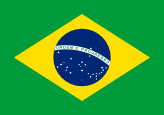
Country flag available in this resolutions
| Icon 32x22 |  |
| Icon 88x62 |  |
Brazil
Brazil: A Colossus of South America
Brazil, officially the Federative Republic of Brazil, stands as a continental giant, not only in terms of its immense landmass – the fifth largest country in the world by area – but also in its vibrant culture, diverse population, and significant global influence. Spanning a vast territory encompassing the Amazon rainforest, a colossal river basin, and an extensive coastline along the Atlantic Ocean, Brazil is a land of unparalleled natural beauty and ecological importance. Its geographical diversity shapes its economy, its history, and the very fabric of its society, making it a truly unique and captivating nation. From the bustling metropolises of So Paulo and Rio de Janeiro to the remote indigenous communities deep within the Amazon, Brazil is a mosaic of experiences and a testament to the resilience and dynamism of its people.
The demographic landscape of Brazil is as varied and complex as its geography. With a population exceeding 214 million people, it is the most populous country in South America and the seventh most populous in the world. This vast populace is a rich tapestry woven from threads of indigenous heritage, European colonization, African slavery, and subsequent waves of immigration from across the globe, including significant communities from Italy, Germany, Japan, and the Middle East. This historical intermingling has resulted in a remarkably diverse gene pool and a unique cultural fusion, evident in everything from its music and cuisine to its religious practices and social customs. The official language is Portuguese, a legacy of its colonial past, yet numerous indigenous languages and dialects are still spoken in various regions, particularly in the Amazon basin. Brazil’s population is also characterized by a significant degree of urbanization, with a large percentage of its citizens residing in major cities. This rapid urbanization, while driving economic growth, has also presented challenges related to infrastructure, housing, and social inequality.
Economically, Brazil is a formidable force, boasting the largest economy in Latin America and one of the largest in the world. It is a major producer and exporter of agricultural commodities, including soybeans, coffee, beef, and sugar, earning it the moniker of a global agricultural powerhouse. Its vast mineral resources, such as iron ore, bauxite, and gold, further bolster its economic strength. In recent decades, Brazil has also made significant strides in industrial development, with robust sectors in manufacturing, automotive production, and aerospace. The discovery of vast offshore oil reserves has also propelled Brazil into the ranks of major oil-producing nations. However, the Brazilian economy has historically been susceptible to fluctuations in global commodity prices and internal political instability, leading to periods of both rapid growth and economic recession. Efforts to diversify the economy, invest in technological innovation, and address systemic issues of corruption and bureaucracy are ongoing priorities for the nation’s economic development.
Brazil’s history is a captivating narrative of exploration, exploitation, and independence. Initially inhabited by indigenous peoples for millennia, the land was “discovered” by Portuguese explorer Pedro Álvares Cabral in 1500. The subsequent colonial period was marked by the exploitation of natural resources, primarily brazilwood, and later sugar cane, which led to the brutal transatlantic slave trade, forcibly bringing millions of Africans to Brazil. This period left an indelible mark on Brazilian society, contributing significantly to its racial and cultural diversity, as well as its enduring legacy of social inequality. Brazil gained its independence from Portugal in 1822, initially as an empire under Emperor Pedro I, and later transitioned to a republic in 1889. The 20th century was a period of significant political upheaval, including military dictatorships and periods of democratic rule, shaping the nation’s political landscape and its ongoing quest for social justice. The legacy of its colonial past and the ongoing struggle to overcome historical injustices continue to be central themes in contemporary Brazilian discourse.
The geography of Brazil is a spectacle of natural wonders. The Amazon rainforest, the largest tropical rainforest on Earth, covers a significant portion of the country’s north, harboring an unparalleled biodiversity and playing a crucial role in regulating the global climate. The Amazon River, the world’s largest river by discharge volume, flows through this verdant expanse, a vital artery for transportation and a source of life for countless species. To the south, the landscape transitions to vast savannas, fertile plains, and a dramatic coastline dotted with stunning beaches, picturesque islands, and vibrant coral reefs. The Pantanal, the world’s largest tropical wetland, located in the southwest, is another ecological marvel, teeming with wildlife. Brazil’s diverse climates range from equatorial in the Amazon to temperate in the south, influencing its agricultural output and the lifestyles of its inhabitants. The country’s immense natural resources, while a source of economic prosperity, also present significant environmental challenges, particularly concerning deforestation and the conservation of its precious ecosystems.
The cultural landscape of Brazil is a vibrant and dynamic fusion, profoundly shaped by its diverse demographic makeup and historical trajectory. Music and dance are central to the Brazilian identity, with genres like samba, bossa nova, and forró resonating globally. The annual Carnival, a spectacular celebration of music, dance, and revelry, held in cities like Rio de Janeiro and Salvador, is a world-renowned event that draws millions of tourists and showcases the exuberance of Brazilian culture. Cuisine is another area where this fusion is evident, with dishes influenced by indigenous, African, and European traditions. Feijoada, a hearty black bean stew, is considered the national dish, while churrasco, a barbecue style of cooking, is a popular delicacy. Religion plays a significant role, with Catholicism being the dominant faith, but a rich syncretism exists, blending Catholic beliefs with African spiritual traditions like Candomblé and Umbanda. The arts, literature, and cinema also reflect Brazil’s complex social and historical narratives, often exploring themes of identity, inequality, and resilience. The passion and creativity of the Brazilian people are palpable in every aspect of their culture, making it a truly captivating and infectious experience for all who encounter it.
Information about country Brazil
Automated text translation, excuse errors, please!
Informations are from the publication CIA The World Factbook.
Country Brazil is situated in a location / continent South America. Brazil has an area of 8 514 877 km2 and 199 321 413 residents. The highest point has a height 3 014 above sea level. and it is called Pico da Neblina. The lowest point is located at the level of 0 above sea level and it is named Atlantic Ocean. System of government is Federal Republic and the date of independence 7th September 1822. The capital city is Brasilia. Brazil has the international abbreviation BR.
Brazil - economy
Total gross domestic product (GDP) is 2 324 000 000 000 $. Total gross domestic product per capita in purchasing power parity is 11 900 $. GDP grows by 2.70 % a year. Inflation (consumer price index) is equal to 6.60 % a year. Brazil have 104 700 000 working-age population (from a total population 199 321 413 people). Unemployment is at 6.00 %. Brazil issued 9.00 % GDP to healt care and 1,70 % GDP to army. The public debt of the country is 54.20 % GDP. The total amount of foreign debt is 397 500 000 000 USD.
Brazil - transport and telecommunications
Brazil has 1 751 868 km of roads, 28 538 km of railway lines and 4 105 airports. The total length of waterways (navigable rivers, canals, etc.) is 50 000 km. There is registered 109 ships.
Number of active mobile phones (sim card) in the country Brazil is 242 232 000. Number of active fixed telephone lines is 43 026 000. Brazil has 75 982 000 internet users, who have the available 23 790 000 Internet connections. Brazil has been assigned a domain first Choose range .br.
Brazil - demography
As suggested above, Brazil has 199 321 413 people. Population growth is in the amount 1.10 % per year. Number of children born per 1000 population per year is 17.48.Every mother has average 1.82 children. The infant mortality rate is 20.50 and maternal mortality 56.00 deaths per 100,000 births. Average estimated life expectancy makes 72.79 years. Mortality is 6.38 people per 1000 population per year.
Brazil - energetics
Brazil consumes a year 438 300 000 000 kWh of electricity. Annual electricity production is 489 500 000 000 kWh in power plants with a total installed electrical capacity 106 200 000 kW. Brazil exports 1 257 000 000 kWh and imports 36 630 000 000 kWh of electricity per year Energy mix of power generation is as follows: fossil fuels: 17.1 %, nuclear energy: 1.9 %, renewable: 6.3 %, hydropower: 74.7 %. The country Brazil is harvested annually 2 633 000 barrels of oil.
Flags
World flags
World flags
Flags of the World countries
Dále doporučujeme:
Odkazy na zajímavé webyLinky na partnerské weby
Tipy na Partnerské weby
Odkazy na partnerské weby
Doporučené odkazy
 |
 |
 |
 |
 |
 |
 |
 |
 |
 |
 |
 |
 |
 |
 |
 |
 |
 |
 |