Brunei
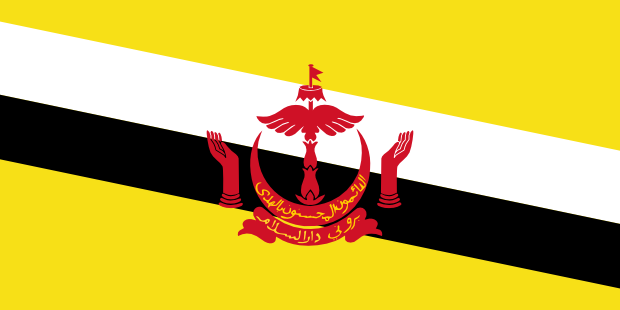
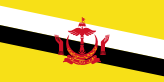
Country flag available in this resolutions
| Icon 32x16 |  |
| Icon 88x44 |  |
Brunei
Brunei: An Oasis of Wealth and Tradition in Southeast Asia
Brunei Darussalam, often referred to simply as Brunei, is a small but remarkably wealthy nation nestled on the northern coast of the island of Borneo in Southeast Asia. Bordered by Malaysia and the South China Sea, its strategic location has played a significant role in its history and its present-day economic prowess. Despite its diminutive size, Brunei commands global attention due to its immense oil and gas reserves, which have transformed it into one of the richest countries in the world. This article delves into the multifaceted aspects of Brunei, exploring its demographics, economy, geography, history, and the unique cultural tapestry that defines this sultanate.
The demographics of Brunei present an interesting picture of a relatively small population with a significant expatriate presence. The total population of Brunei is just over 400,000 people, making it one of the least populous nations in Southeast Asia. The indigenous Malay population forms the majority, comprising around 65% of the total. Within the Malay community, there are various ethnic sub-groups, including the Brunei Malays, Kedayan, and Bisaya. A substantial portion of the population, approximately 20%, consists of ethnic Chinese, who play a vital role in the country’s economy and commerce. Other ethnic groups, such as Indians and various indigenous peoples of Borneo like the Iban and Dusun, also contribute to Brunei’s diverse social fabric. A significant characteristic of Brunei’s population is the large number of foreign workers, particularly from South and Southeast Asia, who are employed in various sectors, from construction and domestic work to skilled professional roles. This expatriate community is crucial to the functioning of Brunei’s economy, though it also presents unique social integration challenges. The official language is Malay, with English widely spoken and used in business and government. Islam is the official religion, and the country adheres to Islamic principles in its legal and social systems, with the Sultan serving as both head of state and religious leader. The population is predominantly young, with a high life expectancy, reflecting the country’s excellent healthcare system.
Brunei’s economy is almost entirely driven by its vast reserves of oil and natural gas. These resources have propelled Brunei into a position of immense wealth, with a high per capita income and a standard of living that is among the highest in the world. The discovery of oil in the 1920s and its subsequent exploitation in the latter half of the 20th century led to a dramatic transformation of the nation. The government, under the absolute monarchy of the Sultan, has utilized the oil wealth to provide extensive social welfare programs for its citizens. These include free education, subsidized housing, and free healthcare, creating a society where basic needs are largely met. The national oil company, Brunei Shell Petroleum (BSP), a joint venture between the Bruneian government and Royal Dutch Shell, is the primary engine of the economy, responsible for the vast majority of the countrys export earnings. While the petroleum sector dominates, the Bruneian government has been actively pursuing economic diversification strategies to reduce its heavy reliance on hydrocarbons. Initiatives are underway to develop sectors such as tourism, finance, information technology, and halal industries. Efforts are also being made to foster entrepreneurship and attract foreign investment in non-oil sectors. However, the global fluctuations in oil prices continue to pose a significant challenge to Brunei’s long-term economic stability. The country also boasts a stable financial sector and has successfully attracted international financial institutions. Despite its wealth, Brunei faces the challenge of ensuring sustainable economic growth and creating employment opportunities for its growing young population in sectors beyond the traditional oil and gas industry.
The geography of Brunei is characterized by its relatively small landmass and a coastline along the South China Sea. The country is divided into two unconnected parts by the Malaysian state of Sarawak, effectively creating an enclave within Malaysian Borneo. The western part, which contains the capital city Bandar Seri Begawan, is larger and more developed, housing the majority of the population and the main economic activities. The eastern part, known as Temburong District, is largely undeveloped and covered by dense rainforest, offering a glimpse into the pristine natural beauty of Borneo. Brunei’s terrain is predominantly low-lying coastal plains interspersed with rolling hills, rising to more mountainous regions in the interior. The country’s climate is tropical rainforest, characterized by high temperatures, humidity, and abundant rainfall throughout the year. This climate supports a rich biodiversity, with extensive areas of pristine rainforest teeming with unique flora and fauna. The Temburong District, in particular, is a haven for ecotourism, with its national park offering opportunities for jungle trekking, canopy walks, and observing wildlife. The coastline is dotted with mangrove swamps and sandy beaches, contributing to the country’s natural appeal. Brunei’s geographical isolation, particularly Temburong, has contributed to the preservation of its natural environment, a feature that the government is keen to leverage for sustainable tourism.
Brunei’s history is a fascinating narrative of kingdoms, empires, and ultimately, a modern sultanate. The region has been inhabited for thousands of years, with archaeological evidence pointing to early human settlements. The historical narrative of Brunei truly begins to solidify with the rise of the Sultanate in the 15th century. Under the rule of Sultan Bolkiah, Brunei experienced its golden age, becoming a powerful maritime empire that extended its influence over much of the island of Borneo and even parts of the Philippines. This era was marked by extensive trade, particularly in sandalwood, camphor, and other spices, which brought considerable wealth to the Sultanate. However, internal strife and the rise of European colonial powers led to a gradual decline of Brunei’s influence. In the 19th century, the British began to exert increasing control over the region, eventually establishing a protectorate over Brunei in 1888. Under British administration, Brunei’s affairs were managed by the Sultan, but foreign policy and defense were under British supervision. The discovery of oil in the early 20th century marked a turning point, providing the economic foundation for Brunei’s future prosperity. During World War II, Brunei was occupied by Japanese forces, a period that left a lasting impact on the nation. After the war, the British maintained their influence until Brunei achieved full independence on January 1, 1984. Since independence, Brunei has been an absolute monarchy, with the Sultan, Hassanal Bolkiah, wielding significant political and religious authority. The nation has largely focused on leveraging its oil wealth to improve the lives of its citizens and maintain its unique cultural identity, while also navigating the complexities of the modern global landscape. The historical legacy of a once-powerful empire continues to shape Brunei’s national pride and its aspirations for the future.
Information about country Brunei
Automated text translation, excuse errors, please!
Informations are from the publication CIA The World Factbook.
Country Brunei is situated in a location / continent East Asia. Brunei has an area of 5 765 km2 and 408 786 residents. The highest point has a height 1 850 above sea level. and it is called Bukit Pagon. The lowest point is located at the level of 0 above sea level and it is named South China Sea. System of government is kontituční monarchy (Sultanate) and the date of independence First January 1984. The capital city is Bandar Seri Begawan. Brunei has the international abbreviation BX.
Brunei - economy
Total gross domestic product (GDP) is 21 240 000 000 $. Total gross domestic product per capita in purchasing power parity is 50 000 $. GDP grows by 1.90 % a year. Inflation (consumer price index) is equal to 2.00 % a year. Brunei have 198 800 working-age population (from a total population 408 786 people). Unemployment is at 2.70 %. Brunei issued 3.00 % GDP to healt care and 4,50 % GDP to army. The total amount of foreign debt is 0 USD.
Brunei - transport and telecommunications
Brunei has 2 971 km of roads and 1 airports. The total length of waterways (navigable rivers, canals, etc.) is 209 km. There is registered 9 ships.
Number of active mobile phones (sim card) in the country Brunei is 443 200. Number of active fixed telephone lines is 79 800. Brunei has 314 900 internet users, who have the available 49 403 Internet connections. Brunei has been assigned a domain first Choose range .bn.
Brunei - demography
As suggested above, Brunei has 408 786 people. Population growth is in the amount 1.69 % per year. Number of children born per 1000 population per year is 17.74.Every mother has average 1.85 children. The infant mortality rate is 11.15 and maternal mortality 24.00 deaths per 100,000 births. Average estimated life expectancy makes 76.37 years. Mortality is 3.39 people per 1000 population per year.
Brunei - energetics
Brunei consumes a year 3 177 000 000 kWh of electricity. Annual electricity production is 3 395 000 000 kWh in power plants with a total installed electrical capacity 759 000 kW. Brunei exports 0 kWh and imports 0 kWh of electricity per year Energy mix of power generation is as follows: fossil fuels: 100 %, nuclear energy: 0 %, renewable: 0.0 %, hydropower: 0.0 %. The country Brunei is harvested annually 149 900 barrels of oil.
Flags
World flags
World flags
Flags of the World countries
Dále doporučujeme:
Doporučené odkazyOdkazy na partnerské weby
Doporučené odkazy a zdroje obsahu
Naše tipy na zajímavé stránky
Odkazy na zajímavé weby
 |
 |
 |
 |
 |
 |
 |
 |
 |
 |
 |
 |
 |
 |
 |
 |
 |
 |
 |