Bulgaria
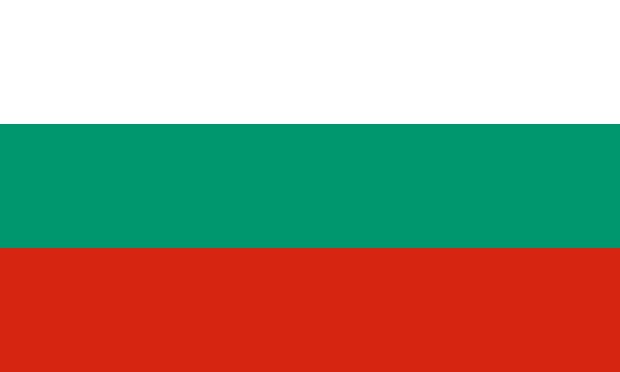
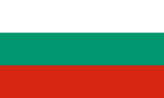
Country flag available in this resolutions
| Icon 32x19 |  |
| Icon 88x53 |  |
Bulgaria
Bulgaria: A Land of Rich History and Diverse Landscapes
Bulgaria, officially the Republic of Bulgaria, is a nation nestled in the heart of the Balkan Peninsula in Southeastern Europe. Its strategic location, bordering Romania to the north, Serbia and North Macedonia to the west, Greece and Turkey to the south, and the Black Sea to the east, has profoundly shaped its history, culture, and economic development. The country boasts a remarkably diverse geography, ranging from the majestic Balkan Mountains, which bisect the country and give it its name, to the fertile plains of the Danubian Plain in the north and the Thracian Plain in the south. The Rhodope Mountains, in the south, are another significant mountain range, known for their ancient forests and picturesque villages. The Black Sea coast offers a popular tourist destination with sandy beaches and vibrant resorts. This varied terrain influences Bulgaria’s climate, which is predominantly temperate continental, with hot summers and cold winters, though the Black Sea coast experiences a more maritime climate.
The demographic landscape of Bulgaria is characterized by a population of approximately 6.5 million people, a figure that has seen a gradual decline in recent decades. This demographic trend is a complex issue influenced by factors such as low birth rates, emigration, and an aging population. The ethnic composition is predominantly Bulgarian, with a significant Turkish minority and smaller Roma, Macedonian, and other groups. The official language is Bulgarian, written in the Cyrillic alphabet, a direct descendant of the Glagolitic script created by Saints Cyril and Methodius in the 9th century. This linguistic heritage is a source of immense national pride and a testament to Bulgaria’s deep historical roots. The majority of the population adheres to Eastern Orthodox Christianity, with Islam being the second-largest religion, primarily among the Turkish minority. Urbanization is a significant trend, with the capital city, Sofia, being the largest and most populous urban center, followed by Plovdiv, Varna, and Burgas.
Bulgaria’s economic journey has been one of significant transformation, particularly since the fall of communism in 1989. The country transitioned from a centrally planned economy to a market-based system, a process that involved privatization, economic liberalization, and integration into global markets. Today, Bulgaria is a member of the European Union, having joined in 2007, and NATO since 2004. This membership has been a catalyst for economic reforms, attracting foreign investment, and fostering trade relations. Key sectors of the Bulgarian economy include services, industry, and agriculture. The service sector, particularly tourism, is a major contributor, with the Black Sea coast and mountain resorts drawing a considerable number of visitors. Industry encompasses a range of activities, including manufacturing, mining, and energy production. Agriculture remains important, with the country being a significant producer of grains, vegetables, fruits, and roses, from which the renowned Bulgarian rose oil is extracted. Challenges persist, including the need for further structural reforms, addressing corruption, and combating brain drain. However, the country has demonstrated resilience and a commitment to economic growth and stability.
The history of Bulgaria is exceptionally rich and spans millennia, marked by periods of great power and influence as well as times of foreign domination. The land has been inhabited since prehistoric times, with evidence of early civilizations. The First Bulgarian Empire, established in the 671 AD, rose to become a dominant force in Southeastern Europe, extending its influence over vast territories. This era saw the flourishing of Bulgarian culture, literature, and art, and the adoption of Christianity in 864 AD, which played a crucial role in shaping national identity. The Second Bulgarian Empire, emerging in the 12th century, continued this legacy, though it eventually fell under Ottoman rule in the late 14th century. The nearly five centuries of Ottoman domination left an indelible mark on Bulgarian society, culture, and economy. The Bulgarian National Revival in the 18th and 19th centuries fostered a spirit of national consciousness and resistance, leading to the liberation of Bulgaria in 1878. The country then embarked on a path of nation-building, experiencing periods of monarchy, and participation in the Balkan Wars and both World Wars. The post-World War II era saw Bulgaria fall under Soviet influence and become a communist state. The transition to democracy in 1989 marked a new chapter, one of reorientation towards Western democratic values and market economics. This long and complex history has endowed Bulgaria with a profound cultural heritage, evident in its numerous historical sites, monasteries, and traditions.
Bulgaria’s cultural landscape is a vibrant tapestry woven from its ancient past and its interactions with various empires and peoples. The Cyrillic script, as mentioned, is a cornerstone of this cultural identity, alongside a rich tradition of folklore, music, and dance. Traditional Bulgarian music often features unique instruments like the gaida (bagpipe) and kaval (flute), and its dances, such as the horo, are known for their communal and energetic nature. The country is home to a wealth of historical and architectural treasures, from ancient Roman ruins in Plovdiv and Sofia to medieval churches and monasteries, many of which are UNESCO World Heritage sites, such as the Rila Monastery. Bulgarian cuisine is hearty and flavorful, influenced by Balkan, Mediterranean, and Ottoman culinary traditions. Staple dishes include yogurt (kiselo mlyako), shopska salad, banitsa (a pastry), and various grilled meats. The Bulgarian Rose Festival, held annually in the Rose Valley, is a world-renowned celebration of the country’s most famous export. Despite its challenges, Bulgaria continues to preserve and celebrate its unique cultural heritage, offering a compelling blend of history, tradition, and natural beauty to all who visit.
Information about country Bulgaria
Automated text translation, excuse errors, please!
Informations are from the publication CIA The World Factbook.
Country Bulgaria is situated in a location / continent Europe. Bulgaria has an area of 110 879 km2 and 7 037 935 residents. The highest point has a height 2 925 above sea level. and it is called Musala. The lowest point is located at the level of 0 above sea level and it is named Black Sea. System of government is republic and the date of independence Third March 1878. The capital city is Sofia. Bulgaria has the international abbreviation BU.
Bulgaria - economy
Total gross domestic product (GDP) is 102 300 000 000 $. Total gross domestic product per capita in purchasing power parity is 13 800 $. GDP grows by 1.70 % a year. Inflation (consumer price index) is equal to 4.20 % a year. Bulgaria have 2 465 000 working-age population (from a total population 7 037 935 people). Unemployment is at 9.60 %. Bulgaria issued 7.40 % GDP to healt care and 2,60 % GDP to army. The public debt of the country is 17.50 % GDP. The total amount of foreign debt is 46 840 000 000 USD.
Bulgaria - transport and telecommunications
Bulgaria has 40 231 km of roads, 4 151 km of railway lines and 202 airports. The total length of waterways (navigable rivers, canals, etc.) is 470 km. There is registered 22 ships.
Number of active mobile phones (sim card) in the country Bulgaria is 10 475 000. Number of active fixed telephone lines is 2 311 000. Bulgaria has 3 395 000 internet users, who have the available 937 195 Internet connections. Bulgaria has been assigned a domain first Choose range .bg.
Bulgaria - demography
As suggested above, Bulgaria has 7 037 935 people. Population growth is in the amount -0.80 % per year. Number of children born per 1000 population per year is 9.20.Every mother has average 1.43 children. The infant mortality rate is 16.13 and maternal mortality 11.00 deaths per 100,000 births. Average estimated life expectancy makes 73.84 years. Mortality is 14.32 people per 1000 population per year.
Bulgaria - energetics
Bulgaria consumes a year 30 380 000 000 kWh of electricity. Annual electricity production is 39 970 000 000 kWh in power plants with a total installed electrical capacity 9 409 000 kW. Bulgaria exports 9 359 000 000 kWh and imports 1 166 000 000 kWh of electricity per year Energy mix of power generation is as follows: fossil fuels: 46.4 %, nuclear energy: 20.3 %, renewable: 1.9 %, hydropower: 22.2 %. The country Bulgaria is harvested annually 1 000 barrels of oil.
Flags
World flags
World flags
Flags of the World countries
Dále doporučujeme:
Odkazy na partnerské webyPartnerské internetové stránky
Tipy na užitečné weby
Doporučené odkazy a zdroje obsahu
Odkazy na užitečné webové stránky
 |
 |
 |
 |
 |
 |
 |
 |
 |
 |
 |
 |
 |
 |
 |
 |
 |
 |
 |