Burma

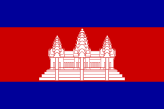
Country flag available in this resolutions
| Icon 32x21 |  |
| Icon 88x59 |  |
Burma
Myanmar, officially the Republic of the Union of Myanmar and commonly known as Burma, is a Southeast Asian nation bordering India, Bangladesh, China, Laos, and Thailand. Its strategic location, rich cultural heritage, and diverse natural landscapes have long captivated the world, even as its recent history has been marked by significant political and social upheaval. Understanding Myanmar requires delving into its multifaceted demographics, its developing economy, its varied geography, and its complex, often turbulent, history.
The demographic tapestry of Myanmar is remarkably diverse, reflecting centuries of migration and interaction among various ethnic groups. While the Bamar (Burman) people constitute the largest ethnic group, making up roughly 68% of the population, the country is home to over 135 officially recognized ethnic groups. These include the Shan, Karen, Rakhine, Mon, Kachin, Chin, and Kayah, each with their own distinct languages, cultures, and traditions. This ethnic mosaic is a source of both national pride and, at times, considerable tension. The population is predominantly Buddhist, with approximately 88% of the people adhering to Theravada Buddhism, which deeply influences the countrys social fabric and daily life. Significant religious minorities include Christians (around 6%), Muslims (around 4%), and Hindus. The population is relatively young, with a median age of 27.9 years, indicating a substantial future workforce and potential for demographic dividends, provided opportunities are created. Urbanization is on the rise, with Yangon (formerly Rangoon) and Mandalay being the largest and most economically significant cities, serving as hubs for commerce, culture, and administration. Rural areas, however, remain home to a significant portion of the population, often engaged in agriculture, which forms the backbone of the national economy. The country’s population density is relatively low compared to some of its neighbors, offering vast tracts of undeveloped land.
Myanmars economy, while possessing considerable natural resources and potential, has historically struggled with underdevelopment, corruption, and the impact of political instability. For decades, the country operated under a centrally planned economy, which stifled private enterprise and led to widespread poverty. Since the transition towards a more market-oriented economy in the early 2010s, there have been signs of progress, with increased foreign investment and growth in sectors like manufacturing, tourism, and telecommunications. However, the military coup in 2021 has severely disrupted these developments, leading to economic contraction, increased inflation, and a deepening humanitarian crisis. Key sectors of the economy include agriculture, which employs a large percentage of the workforce and produces rice, pulses, and oilseeds; natural resources, with significant reserves of jade, rubies, timber, oil, and natural gas; and manufacturing, which is gradually expanding, particularly in garment production. The tourism sector, once a promising avenue for growth, has been severely impacted by the ongoing political situation. The country faces significant challenges in developing its infrastructure, including transportation networks and energy supply, which are crucial for economic development. Poverty remains a persistent issue, particularly in rural areas and among ethnic minority communities.
The geography of Myanmar is as diverse as its people, characterized by a vast and varied landscape that shapes its climate, resources, and settlement patterns. The country is dominated by a central plain, carved by the Irrawaddy River and its tributaries, which form a vital artery for transportation and agriculture. This fertile basin is the heartland of the Bamar population and the nations primary rice-growing region. To the west, the Arakan Yoma mountain range runs parallel to the coast, separating the Irrawaddy valley from the Bay of Bengal. The eastern and northern regions are mountainous, forming part of the Indo-Chinese mountain system, with peaks reaching over 5,800 meters in the Kachin State, bordering China. These highlands are home to many ethnic minority groups and are rich in timber and mineral resources. Myanmar boasts a long coastline along the Bay of Bengal and the Andaman Sea to the south and southwest, offering potential for fisheries and maritime trade. The country experiences a tropical monsoon climate, with distinct wet and dry seasons. The central plains are hot and dry for much of the year, while the coastal and mountainous regions receive abundant rainfall. This varied geography presents both opportunities and challenges for development, from the agricultural potential of the plains to the resource wealth of the highlands and the strategic importance of its coastline.
Myanmars history is a long and intricate narrative of kingdoms, empires, colonial rule, and periods of independence, punctuated by internal conflicts and external influences. Ancient kingdoms like the Pyu, Bagan, and Hanthawaddy laid the foundations of Burmese civilization, leaving behind a rich legacy of art, architecture, and Theravada Buddhism. The Konbaung Dynasty, the last Burmese monarchy, ruled from the mid-18th century until the arrival of the British. British colonial rule began in the mid-19th century, with the annexation of Burma in three Anglo-Burmese Wars. The British integrated Burma into their empire, exploiting its resources and introducing administrative and economic reforms that had lasting impacts. During World War II, Burma was occupied by Japan, and it became a significant theater of war. Following the war, Burma gained independence from Britain on January 4, 1948, becoming the Union of Burma. The post-independence era has been marked by political instability, ethnic insurgencies, and military rule. A military coup in 1962 ushered in decades of authoritarianism under General Ne Win, leading to economic isolation and suppression of dissent. A brief period of democratic opening in the early 1990s, following widespread protests, was short-lived. The country saw another attempt at democratic reform in the 2010s, with the election of Aung San Suu Kyis National League for Democracy. However, this progress was tragically reversed by the military coup in February 2021, which plunged the country back into political turmoil and widespread human rights abuses, leading to a severe humanitarian crisis and international condemnation. The legacy of this complex history continues to shape the present-day challenges and aspirations of the Myanmar people.
Information about country Burma
Automated text translation, excuse errors, please!
Informations are from the publication CIA The World Factbook.
Country Burma is situated in a location / continent East Asia. Burma has an area of 676 578 km2 and 54 584 650 residents. The highest point has a height 5 881 above sea level. and it is called Hkakabo Razi. The lowest point is located at the level of 0 above sea level and it is named Andaman Sea. System of government is The military junta and the date of independence 4th January 1948. The capital city is Rangoon (Yangon). Burma has the international abbreviation BM.
Burma - economy
Total gross domestic product (GDP) is 83 740 000 000 $. Total gross domestic product per capita in purchasing power parity is 1 300 $. GDP grows by 5.50 % a year. Inflation (consumer price index) is equal to 5.20 % a year. Burma have 32 530 000 working-age population (from a total population 54 584 650 people). Unemployment is at 5.50 %. Burma issued 2.00 % GDP to healt care and 2,10 % GDP to army. The total amount of foreign debt is 5 811 000 000 USD.
Burma - transport and telecommunications
Burma has 27 000 km of roads, 5 031 km of railway lines and 74 airports. The total length of waterways (navigable rivers, canals, etc.) is 12 800 km. There is registered 29 ships.
Number of active mobile phones (sim card) in the country Burma is 1 244 000. Number of active fixed telephone lines is 521 100. Burma has 110 000 internet users, who have the available 1 033 Internet connections. Burma has been assigned a domain first Choose range .mm.
Burma - demography
As suggested above, Burma has 54 584 650 people. Population growth is in the amount 1.07 % per year. Number of children born per 1000 population per year is 19.11.Every mother has average 2.23 children. The infant mortality rate is 47.74 and maternal mortality 200.00 deaths per 100,000 births. Average estimated life expectancy makes 65.24 years. Mortality is 8.10 people per 1000 population per year.
Burma - energetics
Burma consumes a year 3 794 000 000 kWh of electricity. Annual electricity production is 5 708 000 000 kWh in power plants with a total installed electrical capacity 1 860 000 kW. Burma exports 0 kWh and imports 0 kWh of electricity per year Energy mix of power generation is as follows: fossil fuels: 67.7 %, nuclear energy: 0 %, renewable: 0.0 %, hydropower: 32.3 %. The country Burma is harvested annually 20 200 barrels of oil.
Flags
World flags
World flags
Flags of the World countries
Dále doporučujeme:
Tipy na zajímavé webyDoporučené internetové odkazy
Odkazy na užitečné webové stránky
Naše tipy na užitečné weby
Partnerské internetové stránky
 |
 |
 |
 |
 |
 |
 |
 |
 |
 |
 |
 |
 |
 |
 |
 |
 |
 |
 |