Cambodia

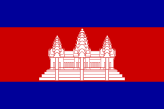
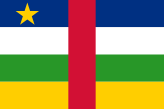
Country flag available in this resolutions
| Icon 32x21 |  |
| Icon 88x59 |  |
Cambodia
Cambodia: A Land of Ancient Wonders and Enduring Spirit
Cambodia, officially known as the Kingdom of Cambodia, is a captivating Southeast Asian nation nestled in the heart of the Indochinese Peninsula. Bordered by Thailand to the west and northwest, Laos to the northeast, and Vietnam to the east and southeast, it also boasts a southwestern coastline along the Gulf of Thailand. This land, steeped in a rich and complex history, is perhaps most famously recognized for the awe-inspiring temples of Angkor, a testament to the power and artistry of the Khmer Empire. Yet, beyond these iconic structures lies a nation with a vibrant culture, a resilient population, and an economy striving for sustained growth, all shaped by its unique geography and tumultuous past.
The demographic landscape of Cambodia is characterized by a relatively young population, a direct consequence of a period of immense loss and subsequent recovery. With a median age hovering around 25 years, the country is in a demographic transition, with a significant portion of its citizens being of working age. The total population, estimated to be over 17 million people, is predominantly ethnic Khmer, who constitute around 90% of the populace. Significant minority groups include the Cham, Vietnamese, and Chinese communities, each contributing to the nations cultural tapestry. The Khmer language is the official language, spoken by the vast majority, though French and English are increasingly understood, particularly in urban centers and the tourism sector. Buddhism, specifically Theravada Buddhism, is the dominant religion, deeply interwoven into the fabric of Cambodian society and influencing its customs, traditions, and daily life. The rural population still forms a substantial majority, though urbanization is steadily increasing as people seek economic opportunities in cities like Phnom Penh, the bustling capital, and Siem Reap, the gateway to the Angkorian marvels. This youthful demographic presents both opportunities and challenges, requiring significant investment in education, healthcare, and job creation to harness its potential for future development.
Geographically, Cambodia is largely defined by its low-lying plains, dominated by the Tonle Sap Lake, the largest freshwater lake in Southeast Asia, and the Mekong River, which flows through the country, serving as a vital artery for transportation and sustenance. The fertile plains surrounding these waterways are ideal for agriculture, with rice being the staple crop and a cornerstone of the Cambodian economy and diet. To the north and south, the landscape transitions to more mountainous regions, with the Cardamom Mountains forming a significant range in the southwest, harboring diverse flora and fauna and offering opportunities for ecotourism. The climate is tropical, characterized by distinct wet and dry seasons. The wet season, from May to October, brings heavy rainfall, while the dry season, from November to April, is marked by sunshine and higher temperatures. This geographical bounty, particularly the fertile land and abundant water resources, has historically supported large populations and agricultural productivity, but also makes the country susceptible to the impacts of climate change, such as increased flooding and drought. The strategic location of Cambodia, with access to the sea, has also played a role in its historical trade and interactions with neighboring regions.
The history of Cambodia is a saga of grandeur, devastation, and remarkable resilience. The Khmer Empire, which flourished from the 9th to the 15th centuries, left behind an indelible legacy, most notably the magnificent temple complexes of Angkor Wat and Angkor Thom. This era represents a golden age of Khmer civilization, marked by sophisticated architecture, advanced irrigation systems, and a powerful monarchy. However, the empire eventually declined, and Cambodia entered a period of fragmentation and foreign influence. The 19th century saw Cambodia become a French protectorate, a period that brought some modernization but also curtailed its sovereignty. The mid-20th century witnessed a brief period of independence followed by the tragic Khmer Rouge regime (1975-1979), led by Pol Pot. This brutal totalitarian regime sought to create an agrarian socialist utopia, resulting in the deaths of an estimated 1.5 to 2 million Cambodians through execution, starvation, disease, and overwork – a period often referred to as the Killing Fields. The subsequent Vietnamese invasion and the establishment of a new government marked the beginning of a long and arduous reconstruction process. The country has since been on a path of recovery, striving to heal from its past traumas and build a more prosperous future. This history profoundly shapes the national psyche, fostering a deep appreciation for peace and a strong sense of cultural identity.
The Cambodian economy is a developing one, gradually recovering and growing after decades of conflict and instability. It is a mixed economy with a significant reliance on agriculture, garment manufacturing, tourism, and construction. Agriculture remains a vital sector, employing a substantial portion of the workforce and producing essential crops like rice, cassava, and rubber. The garment industry has become a major export earner, providing employment for hundreds of thousands, primarily women, though concerns about working conditions and wages persist. Tourism, fueled by the allure of Angkor Wat and the countrys natural beauty, is another crucial source of revenue, contributing significantly to foreign exchange earnings and local employment. The government has been actively promoting foreign investment and infrastructure development to further stimulate economic growth and diversify its economic base. Challenges remain, including poverty, income inequality, corruption, and the need for further improvements in education and healthcare systems. However, the economic outlook is generally positive, with consistent growth rates in recent years, indicating the countrys potential for further development and integration into the global economy. The ongoing efforts to rebuild and modernize are testament to the nations determination to overcome its past and forge a brighter future.
Information about country Cambodia
Automated text translation, excuse errors, please!
Informations are from the publication CIA The World Factbook.
Country Cambodia is situated in a location / continent East Asia. Cambodia has an area of 181 035 km2 and 14 952 665 residents. The highest point has a height 1 810 above sea level. and it is called Phnum Aoral. The lowest point is located at the level of 0 above sea level and it is named Gulf of Thailand. System of government is constitutional monarchy and the date of independence 9th November 1953. The capital city is Phnom Penh. Cambodia has the international abbreviation CB.
Cambodia - economy
Total gross domestic product (GDP) is 33 890 000 000 $. Total gross domestic product per capita in purchasing power parity is 2 200 $. GDP grows by 6.10 % a year. Inflation (consumer price index) is equal to 5.50 % a year. Cambodia have 8 800 000 working-age population (from a total population 14 952 665 people). Unemployment is at 3.50 %. Cambodia issued 5.80 % GDP to healt care and 3,00 % GDP to army. The total amount of foreign debt is 5 028 000 000 USD.
Cambodia - transport and telecommunications
Cambodia has 38 093 km of roads, 690 km of railway lines and 16 airports. The total length of waterways (navigable rivers, canals, etc.) is 3 700 km. There is registered 544 ships.
Number of active mobile phones (sim card) in the country Cambodia is 10 000 000. Number of active fixed telephone lines is 530 000. Cambodia has 78 500 internet users, who have the available 13 768 Internet connections. Cambodia has been assigned a domain first Choose range .kh.
Cambodia - demography
As suggested above, Cambodia has 14 952 665 people. Population growth is in the amount 1.69 % per year. Number of children born per 1000 population per year is 25.17.Every mother has average 2.78 children. The infant mortality rate is 54.08 and maternal mortality 250.00 deaths per 100,000 births. Average estimated life expectancy makes 63.04 years. Mortality is 7.97 people per 1000 population per year.
Cambodia - energetics
Cambodia consumes a year 1 759 000 000 kWh of electricity. Annual electricity production is 1 137 000 000 kWh in power plants with a total installed electrical capacity 390 900 kW. Cambodia exports 0 kWh and imports 842 000 000 kWh of electricity per year Energy mix of power generation is as follows: fossil fuels: 95.2 %, nuclear energy: 0 %, renewable: 1.5 %, hydropower: 3.3 %.
Flags
World flags
World flags
Flags of the World countries
Dále doporučujeme:
Zajímavé internetové odkazyTipy na zajímavé weby
Zajímavé webové stránky
Doporučené odkazy na zajímavé weby
Doporučené internetové odkazy
 |
 |
 |
 |
 |
 |
 |
 |
 |
 |
 |
 |
 |
 |
 |
 |
 |
 |
 |