Canada
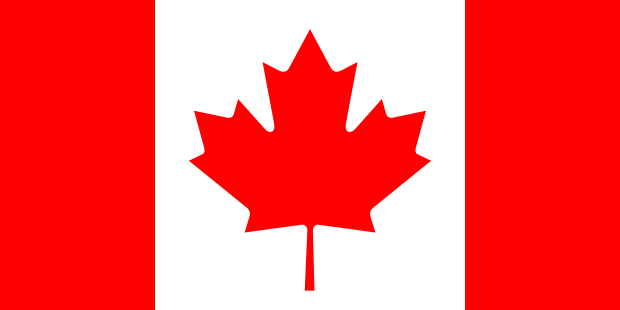
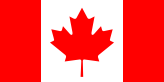
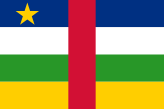
Country flag available in this resolutions
| Icon 32x16 |  |
| Icon 88x44 |  |
Canada
Canada: A Vast Tapestry of Nature, Culture, and Prosperity
Canada, the second-largest country in the world by total area, is a land of breathtaking natural beauty, diverse cultures, and a robust economy. Spanning from the Atlantic to the Pacific oceans, and northward to the Arctic, its geography is as varied as its people. From the rugged coastlines of Newfoundland and Labrador to the majestic Rocky Mountains, the vast prairies, and the dense boreal forests, Canada offers an unparalleled landscape that shapes its identity and influences its way of life. The sheer scale of the country means that climates can vary dramatically, from the temperate rainforests of British Columbia to the harsh, frozen tundra of the far north. This geographical diversity has historically influenced settlement patterns, economic development, and the very character of its inhabitants. The Great Lakes region, a vital economic hub, contrasts sharply with the sparsely populated Canadian Shield, a vast area rich in mineral resources. Further west, the fertile Prairies are the breadbasket of the nation, while the Pacific coast boasts a milder climate and a gateway to Asia. The Arctic, with its unique ecosystems and indigenous populations, represents a frontier of both environmental significance and geopolitical interest.
The demographic landscape of Canada is a testament to its history as a nation built by immigration. While its indigenous peoples have inhabited the land for millennia, the arrival of European settlers, primarily French and British, in the 17th and 18th centuries laid the foundations for modern Canada. Today, Canada is renowned for its multiculturalism, a deliberate policy that celebrates and integrates people from all corners of the globe. This diversity is evident in its major cities, which are vibrant mosaics of languages, traditions, and cuisines. Toronto, Vancouver, and Montreal consistently rank among the most multicultural cities in the world. The country’s population, while growing, remains relatively sparse given its immense size, with the majority of Canadians residing within a hundred kilometers of the US border. This concentration in the south facilitates trade and transportation but also highlights the vast, undeveloped wilderness that characterizes much of the nation. The aging population is a growing concern, as in many developed countries, leading to discussions about immigration policies and social support systems. The cultural fabric is a rich blend, with distinct French-Canadian influences in Quebec, and a broader Anglophone culture permeating the rest of the country, all enriched by the contributions of countless immigrant communities.
Canada’s history is a fascinating narrative of exploration, colonization, confederation, and nation-building. The initial exploration by European powers, particularly France and Britain, led to a long period of rivalry and conflict, culminating in British dominance. The Confederation in 1867, which united three British North American colonies into a single Dominion, marked a pivotal moment in the development of Canada as a distinct entity. The subsequent westward expansion, fueled by the railway and the promise of land, saw the incorporation of new provinces and territories. The 20th century brought significant changes, including Canada’s growing role on the world stage, its participation in two World Wars, and the development of a strong social safety net. The Quiet Revolution in Quebec during the 1960s led to a resurgence of French-Canadian identity and a redefinition of the province’s place within Canada. The ongoing discussions about national unity, particularly concerning Quebec’s aspirations for greater autonomy or independence, have been a recurring theme in Canadian political discourse. The country’s relationship with its indigenous peoples is also a crucial and evolving aspect of its history, with a growing emphasis on reconciliation and addressing the legacies of colonialism.
Economically, Canada is a highly developed nation with a diversified economy. It is a major global player in natural resources, particularly oil, natural gas, timber, and minerals. The energy sector is a significant contributor to the national GDP, with vast reserves of oil sands in Alberta being a key asset. However, Canada is also moving towards a more knowledge-based economy, with strong sectors in technology, finance, and advanced manufacturing. Its proximity to the United States has fostered a close economic relationship, with significant trade flowing across the border. The Canadian banking system is considered one of the most stable in the world, a testament to its conservative regulatory approach. While resource extraction remains vital, there is a growing emphasis on innovation and sustainable development. The country’s social programs, such as universal healthcare and robust unemployment benefits, are funded through a progressive tax system. The economic challenges include regional disparities, the need to diversify away from over-reliance on commodity prices, and adapting to global economic shifts. The recent focus on green technologies and renewable energy represents a significant future direction for the Canadian economy, aiming to balance resource wealth with environmental responsibility.
Culturally, Canada is a fascinating blend of influences. Its official bilingualism, English and French, is a defining characteristic, particularly in Quebec where French is the primary language. However, the multiculturalism policy has fostered an environment where hundreds of languages are spoken, and diverse cultural practices are celebrated. Canadian literature, art, and music have gained international recognition, reflecting the unique experiences and perspectives of its people. From the Group of Seven’s iconic landscape paintings to the literary works of Margaret Atwood and Alice Munro, Canadian artists have consistently explored themes of identity, place, and the human condition. The performing arts also thrive, with vibrant theatre scenes in major cities and a strong tradition of music festivals. Sports play a significant role in Canadian identity, with ice hockey being the undisputed national passion, but other sports like lacrosse, curling, and Canadian football also hold important cultural significance. The vastness of the country and its diverse climate also influence leisure activities, with Canadians embracing outdoor pursuits like skiing, hiking, and canoeing. The concept of “Canadian values” often includes tolerance, politeness, and a commitment to social justice, aspects that are frequently discussed and debated within the country.
In conclusion, Canada is a nation of immense geographical scale, rich historical depth, and a vibrant, multicultural populace. Its economy, while rooted in its abundant natural resources, is increasingly embracing innovation and sustainability. The country’s commitment to diversity and its unique cultural tapestry make it a compelling and dynamic place. From the rugged beauty of its wilderness to the bustling energy of its cities, Canada continues to evolve, shaping its identity on the global stage as a land of opportunity and a beacon of multiculturalism. Its future challenges and triumphs will undoubtedly be shaped by its ongoing commitment to inclusivity, its stewardship of its natural environment, and its ability to adapt to an ever-changing world. The narrative of Canada is one of continuous creation, a grand experiment in nationhood that embraces its past while looking forward to a promising future.
Information about country Canada
Automated text translation, excuse errors, please!
Informations are from the publication CIA The World Factbook.
Country Canada is situated in a location / continent North America. Canada has an area of 9 984 670 km2 and 34 300 083 residents. The highest point has a height 5 959 above sea level. and it is called Mount Logan. The lowest point is located at the level of 0 above sea level and it is named Atlantic Ocean. System of government is Federal Republic, Commonwealth member country and the date of independence July 1, 1867. The capital city is Ottawa. Canada has the international abbreviation CA.
Canada - economy
Total gross domestic product (GDP) is 1 414 000 000 000 $. Total gross domestic product per capita in purchasing power parity is 41 100 $. GDP grows by 2.50 % a year. Inflation (consumer price index) is equal to 2.90 % a year. Canada have 18 670 000 working-age population (from a total population 34 300 083 people). Unemployment is at 7.50 %. Canada issued 10.90 % GDP to healt care and 1,10 % GDP to army. The public debt of the country is 87.40 % GDP. The total amount of foreign debt is 1 181 000 000 000 USD.
Canada - transport and telecommunications
Canada has 1 042 300 km of roads, 46 552 km of railway lines and 1 453 airports. The total length of waterways (navigable rivers, canals, etc.) is 636 km. There is registered 181 ships.
Number of active mobile phones (sim card) in the country Canada is 25 858 000. Number of active fixed telephone lines is 16 438 000. Canada has 26 960 000 internet users, who have the available 8 515 000 Internet connections. Canada has been assigned a domain first Choose range .ca.
Canada - demography
As suggested above, Canada has 34 300 083 people. Population growth is in the amount 0.78 % per year. Number of children born per 1000 population per year is 10.28.Every mother has average 1.59 children. The infant mortality rate is 4.85 and maternal mortality 12.00 deaths per 100,000 births. Average estimated life expectancy makes 81.48 years. Mortality is 8.09 people per 1000 population per year.
Canada - energetics
Canada consumes a year 504 800 000 000 kWh of electricity. Annual electricity production is 580 600 000 000 kWh in power plants with a total installed electrical capacity 131 500 000 kW. Canada exports 43 910 000 000 kWh and imports 18 790 000 000 kWh of electricity per year Energy mix of power generation is as follows: fossil fuels: 28.8 %, nuclear energy: 10.1 %, renewable: 3.9 %, hydropower: 57.0 %. The country Canada is harvested annually 3 592 000 barrels of oil.
Flags
World flags
World flags
Flags of the World countries
Dále doporučujeme:
Zajímavé webové stránkyZajímavé linky na nejrůznější weby
Tipy na užitečné weby
Naše tipy na užitečné weby
Partnerské internetové stránky
 |
 |
 |
 |
 |
 |
 |
 |
 |
 |
 |
 |
 |
 |
 |
 |
 |
 |
 |