Benin
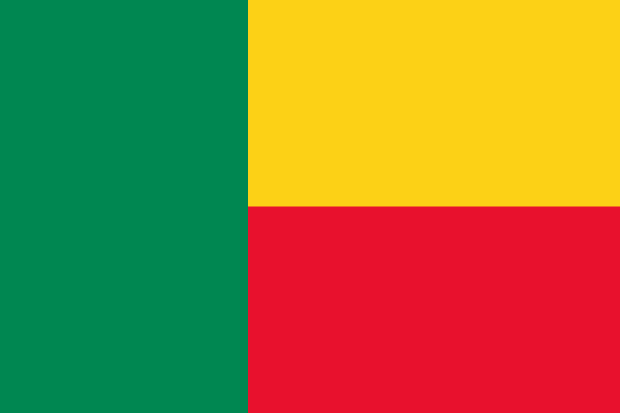
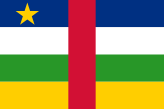
Country flag available in this resolutions
| Icon 32x21 |  |
| Icon 88x59 |  |
Benin
Benin: A Nation Steeped in History and Rich in Culture
Benin, officially the Republic of Benin, is a West African nation situated on the Gulf of Guinea. Bordered by Togo to the west, Nigeria to the east, and Burkina Faso and Niger to the north, Benin’s geographical position has profoundly shaped its history and cultural tapestry. The country’s relatively small size belies its significant historical importance, particularly its role in the transatlantic slave trade, and its vibrant contemporary cultural landscape. Understanding Benin requires delving into its diverse demographics, its evolving economy, its varied geography, and its complex historical trajectory.
The demographic makeup of Benin is characterized by its youthfulness and ethnic diversity. The population is predominantly young, with a significant proportion under the age of 25, a common demographic trend across many African nations. This youthful population presents both opportunities and challenges for the countrys development, demanding robust investments in education and employment creation. Ethnically, Benin is a mosaic of over sixty distinct groups, each with its own language, customs, and traditions. Among the most prominent are the Fon, who historically formed the powerful Kingdom of Dahomey, the Yoruba, predominantly in the east, the Bariba in the north, and the Adja in the south. This rich ethnic diversity contributes to the country’s vibrant cultural scene, evident in its music, dance, art, and religious practices. While French is the official language, a multitude of indigenous languages are spoken daily, fostering a dynamic linguistic environment. The majority of Beninese people practice a combination of indigenous religions, Christianity, and Islam, often with a syncretic approach that blends traditional beliefs with Abrahamic faiths. Voodoo, in particular, though often misunderstood, remains an integral part of the spiritual life for many, deeply interwoven with social and cultural practices.
Economically, Benin is classified as a least developed country, heavily reliant on agriculture, which employs a substantial portion of the population and contributes significantly to its GDP. The main agricultural products include cotton, cassava, yams, maize, and palm oil. Cotton production is a cornerstone of the agricultural sector, providing a vital source of income for many rural households and a key export commodity. However, this reliance on agriculture makes the economy vulnerable to fluctuations in commodity prices and adverse weather conditions. Beyond agriculture, the informal sector plays a crucial role in the Beninese economy, with many individuals engaged in small-scale trading and petty entrepreneurship. The country has made efforts to diversify its economy, with growing interest in sectors such as tourism, telecommunications, and services. The port of Cotonou, the economic capital, is a vital hub for regional trade, facilitating the import and export of goods for Benin and its landlocked neighbors. Despite these efforts, challenges persist, including poverty, unemployment, and a need for improved infrastructure and access to capital for small and medium-sized enterprises. Foreign aid and remittances from Beninese citizens working abroad also contribute to the national income.
Benin’s geography is diverse, offering a range of landscapes from coastal plains to savannas and highlands. The country’s coastline along the Gulf of Guinea is characterized by sandy beaches, lagoons, and mangrove swamps, with the capital city, Porto-Novo, and the economic hub, Cotonou, situated in this southern region. The southern part of the country is also characterized by fertile land, ideal for agriculture, and is home to the majority of the population. Moving north, the landscape transitions to a savanna belt, with higher elevations and a more arid climate. The extreme north features a more rugged terrain, bordering the Sahel region. Benin possesses several significant rivers, including the Niger River, which forms part of its northern border, and its tributaries, such as the Benue River. These rivers are important for transportation, irrigation, and fishing, though their navigability can be seasonal. The country’s natural resources, while not as abundant as in some neighboring nations, include small deposits of oil, limestone, and clay. The varied climate, ranging from tropical along the coast to semi-arid in the north, influences agricultural practices and the distribution of vegetation and wildlife.
The history of Benin is long and complex, marked by the rise and fall of powerful kingdoms and the profound impact of external forces. The region that is now Benin was once dominated by the Kingdom of Dahomey, a formidable state that flourished from the 17th to the 19th centuries. Dahomey was known for its highly organized military, including its all-female warriors, and its significant involvement in the transatlantic slave trade. The kingdom’s economic prosperity was largely built on the capture and sale of enslaved people to European traders. Cities like Ouidah became major ports for the slave trade, leaving an indelible scar on the nation’s history and its people. The remnants of this dark past, such as the “Door of No Return” in Ouidah, serve as poignant reminders of the human suffering that occurred. In the late 19th century, Benin was colonized by the French and became known as French Dahomey. Under French rule, the territory was integrated into French West Africa, and its administrative structures were reorganized. Following a period of colonial rule, Benin gained its independence on August 1, 1960. The post-independence era has been marked by political instability, including a series of coups and military regimes, before the country transitioned to a multi-party democracy in the early 1990s. This transition, often referred to as the “Beninese Revolution,” was a significant moment in the country’s democratic journey, establishing a more stable and participatory political system. The legacy of its past continues to shape Benin’s identity, influencing its social structures, its relationship with the international community, and its ongoing quest for economic and social development.
Information about country Benin
Automated text translation, excuse errors, please!
Informations are from the publication CIA The World Factbook.
Country Benin is situated in a location / continent Africa. Benin has an area of 112 622 km2 and 9 598 787 residents. The highest point has a height 658 above sea level. and it is called Mont Sokbaro. The lowest point is located at the level of 0 above sea level and it is named Atlantic Ocean. System of government is republic and the date of independence First August 1960. The capital city is Porto-Novo (official capital). Benin has the international abbreviation BN.
Benin - economy
Total gross domestic product (GDP) is 14 870 000 000 $. Total gross domestic product per capita in purchasing power parity is 1 500 $. GDP grows by 3.10 % a year. Inflation (consumer price index) is equal to 2.70 % a year. Benin have 3 662 000 working-age population (from a total population 9 598 787 people). Benin issued 4.20 % GDP to healt care and 1,00 % GDP to army. The public debt of the country is 31.10 % GDP. The total amount of foreign debt is 1 395 000 000 USD.
Benin - transport and telecommunications
Benin has 16 000 km of roads, 438 km of railway lines and 5 airports. The total length of waterways (navigable rivers, canals, etc.) is 150 km.
Number of active mobile phones (sim card) in the country Benin is 7 765 000. Number of active fixed telephone lines is 152 700. Benin has 200 100 internet users, who have the available 495 Internet connections. Benin has been assigned a domain first Choose range .bj.
Benin - demography
As suggested above, Benin has 9 598 787 people. Population growth is in the amount 2.88 % per year. Number of children born per 1000 population per year is 37.55.Every mother has average 5.22 children. The infant mortality rate is 60.03 and maternal mortality 350.00 deaths per 100,000 births. Average estimated life expectancy makes 60.26 years. Mortality is 8.79 people per 1000 population per year.
Benin - energetics
Benin consumes a year 778 000 000 kWh of electricity. Annual electricity production is 120 000 000 kWh in power plants with a total installed electrical capacity 60 000 kW. Benin exports 0 kWh and imports 866 000 000 kWh of electricity per year Energy mix of power generation is as follows: fossil fuels: 98.3 %, nuclear energy: 0 %, renewable: 0.0 %, hydropower: 1.7 %.
Flags
World flags
World flags
Flags of the World countries
Dále doporučujeme:
Doporučené odkazy na zajímavé webyTipy na zajímavé weby
Zajímavé webové stránky
Zajímavé linky na nejrůznější weby
Tipy na Partnerské weby
 |
 |
 |
 |
 |
 |
 |
 |
 |
 |
 |
 |
 |
 |
 |
 |
 |
 |
 |