Central African Republic
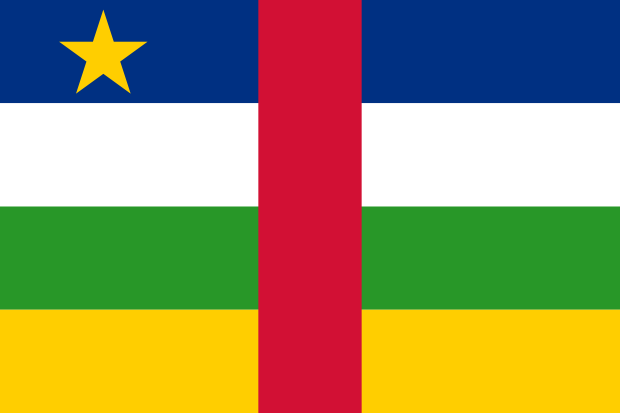
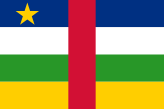
Country flag available in this resolutions
| Icon 32x21 |  |
| Icon 88x59 |  |
Central African Republic
The Central African Republic (CAR), a landlocked nation nestled in the heart of Africa, presents a complex tapestry of challenges and potential. Its vast territory, characterized by a diverse geography, has historically been a crossroads for various ethnic groups, each contributing to the nation’s rich cultural heritage. However, this rich heritage has often been overshadowed by persistent political instability, economic hardship, and humanitarian crises that have plagued the country for decades. Understanding the CAR requires delving into its demographics, intricate history, precarious economy, and striking geography, all of which intertwine to shape its present and future trajectory.
Demographically, the Central African Republic is a young nation, with a significant proportion of its population under the age of 15. This youthful demographic presents both opportunities and challenges. On one hand, it signifies a potential workforce for the future and a vibrant cultural dynamism. On the other hand, it strains existing resources, particularly in education and healthcare, and contributes to high unemployment rates among young people, a factor that can be exploited during periods of unrest. The country’s population, estimated to be around 5.9 million people, is distributed unevenly across its territory. The majority of the population resides in rural areas, relying on subsistence agriculture for their livelihoods. Urban centers, such as the capital Bangui, are growing, but often struggle with inadequate infrastructure and services. Ethnic and linguistic diversity is a defining characteristic of the CAR. Over 80 distinct ethnic groups inhabit the country, each with its own language and traditions. While this diversity enriches the nation’s cultural landscape, it has also, at times, been a source of division and conflict, exacerbated by political manipulation. French and Sango are the official languages, with Sango serving as the lingua franca, facilitating communication across the diverse ethnic groups. The CAR faces significant challenges in providing adequate healthcare and education to its population. Life expectancy is low, and maternal and child mortality rates remain alarmingly high. Access to quality education is limited, particularly in rural areas, contributing to low literacy rates and hindering socio-economic development.
The history of the Central African Republic is a narrative marked by colonial exploitation, a brief period of post-independence optimism, and prolonged periods of political turmoil and conflict. The region was colonized by France in the late 19th century, becoming part of French Equatorial Africa. This colonial period saw the exploitation of natural resources, particularly rubber and diamonds, and the imposition of a hierarchical administrative system that often disregarded local customs and structures. Independence was achieved on August 13, 1960, under the leadership of Barthélemy Boganda, a charismatic figure who envisioned a unified and prosperous nation. However, his untimely death shortly before independence plunged the country into a cycle of political instability. The post-independence era has been characterized by a series of coups, military dictatorships, and civil wars. Jean-Bédel Bokassa’s brutal and eccentric regime from 1966 to 1979, during which he declared himself Emperor, is a particularly dark chapter in the CAR’s history, marked by widespread human rights abuses and economic mismanagement. Subsequent governments have struggled to establish lasting peace and good governance. The country has been plagued by rebellions, ethnic tensions, and the rise of powerful armed groups, often fueled by external interference and the exploitation of natural resources. The most recent major conflicts, beginning in 2012, have led to widespread displacement, humanitarian crises, and immense suffering for the civilian population. Despite the presence of international peacekeeping forces, achieving lasting stability remains an elusive goal.
The economy of the Central African Republic is one of the weakest and most underdeveloped in the world. It is heavily reliant on subsistence agriculture, which employs the vast majority of the population. The agricultural sector produces crops such as cassava, maize, yams, and bananas, primarily for local consumption. Cash crops like cotton and coffee have historically been important exports, but their production has been severely impacted by insecurity and lack of investment. The country is rich in natural resources, including diamonds, gold, uranium, and timber, which hold significant potential for economic development. However, the extraction and export of these resources have often been marred by corruption, illicit trade, and conflict, with little benefit trickling down to the general population. The informal sector plays a crucial role in the economy, providing livelihoods for many, but it operates largely outside the purview of government regulation and taxation. The CAR faces immense challenges in attracting foreign investment due to its persistent instability, weak infrastructure, and poor governance. The country’s infrastructure is severely underdeveloped, with limited road networks, unreliable electricity supply, and inadequate access to clean water and sanitation. This hinders trade, economic activity, and the delivery of essential services. The CAR is heavily dependent on foreign aid to sustain its basic functions and address humanitarian needs. The ongoing humanitarian crisis, exacerbated by conflict and displacement, places an enormous strain on the country’s already fragile economy. Efforts to diversify the economy, improve governance, and create a more favorable investment climate are crucial for the long-term development and prosperity of the Central African Republic.
The geography of the Central African Republic is characterized by its central location within the African continent, its vastness, and its diverse landscapes. Landlocked, it shares borders with Chad to the north, Sudan and South Sudan to the east, the Democratic Republic of Congo and the Republic of Congo to the south, and Cameroon to the west. The country’s territory spans approximately 622,984 square kilometers, making it one of the larger nations in Africa. The landscape is predominantly a vast plateau, with an average elevation of around 750 meters above sea level. This plateau is characterized by rolling savannas, interspersed with dense tropical forests in the south and more arid Sahelian zones in the north. The Oubangui River, a major tributary of the Congo River, is the country’s most important waterway and serves as a vital transportation route, particularly for goods and people moving between the capital, Bangui, and more remote regions. The river basin supports much of the country’s population and agricultural activity. The north of the country features more open grasslands and semi-arid terrain, gradually transitioning towards the more humid tropical forests of the south. The CAR is also home to several mountain ranges, including the Bongo Massif in the east, which forms part of the border with Sudan. The country’s climate is tropical, with distinct wet and dry seasons. The wet season typically runs from May to October, bringing heavy rainfall, while the dry season lasts from November to April. Temperatures are generally high throughout the year. The country’s natural resources are abundant, including diamonds, gold, uranium, and timber, which have historically been, and continue to be, significant economic drivers, albeit often with negative consequences due to mismanagement and conflict. The vast savannas and forests are home to a diverse array of wildlife, including elephants, lions, giraffes, and hippos, though poaching and habitat loss pose significant threats to these populations. The strategic location of the CAR, at the crossroads of several regions, has historically made it a transit point for trade and migration, but also a theater for regional conflicts and external influences.
Information about country Central African Republic
Automated text translation, excuse errors, please!
Informations are from the publication CIA The World Factbook.
Country Central African Republic is situated in a location / continent Africa. Central African Republic has an area of 622 984 km2 and 5 057 208 residents. The highest point has a height 1 420 above sea level. and it is called Mont Ngaoui. The lowest point is located at the level of 335 above sea level and it is named Oubangui River. and the date of independence 13th August 1960. The capital city is Bangui. Central African Republic has the international abbreviation CT.
Central African Republic - economy
Total gross domestic product (GDP) is 3 688 000 000 $. Total gross domestic product per capita in purchasing power parity is 800 $. GDP grows by 3.10 % a year. Inflation (consumer price index) is equal to 1.70 % a year. Central African Republic have 1 926 000 working-age population (from a total population 5 057 208 people). Unemployment is at 8.00 %. Central African Republic issued 4.30 % GDP to healt care .The total amount of foreign debt is 483 900 000 USD.
Central African Republic - transport and telecommunications
Central African Republic has 24 307 km of roads and 40 airports. The total length of waterways (navigable rivers, canals, etc.) is 2 800 km.
Number of active mobile phones (sim card) in the country Central African Republic is 1 124 000. Number of active fixed telephone lines is 2 300. Central African Republic has 22 600 internet users, who have the available 20 Internet connections. Central African Republic has been assigned a domain first Choose range .cf.
Central African Republic - demography
As suggested above, Central African Republic has 5 057 208 people. Population growth is in the amount 2.14 % per year. Number of children born per 1000 population per year is 36.13.Every mother has average 4.57 children. The infant mortality rate is 97.17 and maternal mortality 890.00 deaths per 100,000 births. Average estimated life expectancy makes 50.48 years. Mortality is 14.71 people per 1000 population per year.
Central African Republic - energetics
Central African Republic consumes a year 148 800 000 kWh of electricity. Annual electricity production is 160 000 000 kWh in power plants with a total installed electrical capacity 46 000 kW. Central African Republic exports 0 kWh and imports 0 kWh of electricity per year Energy mix of power generation is as follows: fossil fuels: 45.7 %, nuclear energy: 0 %, renewable: 0.0 %, hydropower: 54.3 %.
Flags
World flags
World flags
Flags of the World countries
Dále doporučujeme:
Zajímavé internetové odkazyOdkazy na partnerské weby
Naše tipy na užitečné weby
Zajímavé webové stránky
Partnerské internetové stránky
 |
 |
 |
 |
 |
 |
 |
 |
 |
 |
 |
 |
 |
 |
 |
 |
 |
 |
 |