Botswana
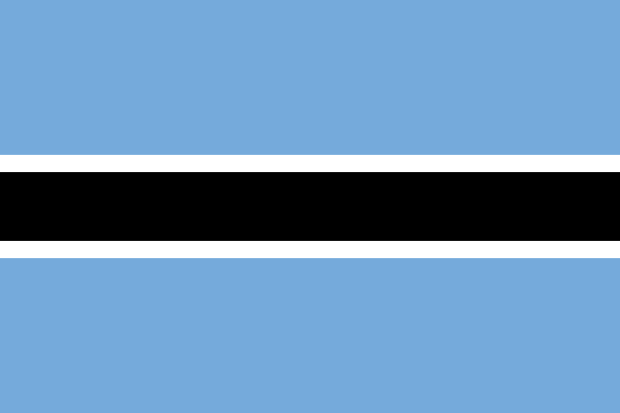
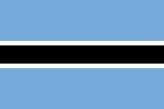
Country flag available in this resolutions
| Icon 32x21 |  |
| Icon 88x59 |  |
Botswana
Botswana: A Land of Contrasts and Resilience
Botswana, officially the Republic of Botswana, is a landlocked country located in Southern Africa. It is a nation that captivates with its stark beauty, its remarkable economic success story, and its rich, albeit often challenging, history. From the vast, arid expanses of the Kalahari Desert to the life-giving Okavango Delta, Botswana offers a landscape of dramatic contrasts, a reflection of its diverse population and its journey towards self-determination. Understanding Botswana requires delving into its demographics, its economic foundations, its geographical peculiarities, and the historical currents that have shaped its present.
The demographic landscape of Botswana is characterized by a relatively small population, numbering approximately 2.3 million people according to recent estimates. This sparsity of inhabitants is largely dictated by the countrys geographical realities, with a significant portion of its landmass being arid or semi-arid. The population is predominantly young, with a median age that reflects a developing nation, and a growth rate that, while present, has seen some moderation in recent years. The ethnic composition is diverse, though the Tswana people form the largest ethnic group, lending their name to the country itself. Other significant ethnic groups include the Bakgalagadi, the Basarwa (San), and smaller populations of Kalanga, Herero, and various immigrant communities. This diversity has, for the most part, been managed with a degree of social cohesion, a testament to the countrys post-independence political stability. Urbanization is a growing trend, with the capital city, Gaborone, and other major centers like Francistown and Selebi-Phikwe experiencing an influx of people seeking economic opportunities. However, a substantial portion of the population still resides in rural areas, maintaining traditional livelihoods, particularly in agriculture and cattle ranching, which are deeply ingrained in the cultural fabric of Botswana. The country has, unfortunately, been significantly impacted by the HIV/AIDS pandemic, which has had a profound demographic effect, though concerted efforts in prevention and treatment have led to improvements in life expectancy and a reduction in new infections over the past decade.
Economically, Botswana stands as a remarkable success story in Africa, often lauded as one of the continents most prosperous nations. This prosperity is largely built upon the foundation of its abundant diamond reserves. The discovery of diamonds in the early 1960s, shortly before independence, proved to be a transformative event. The country has managed its diamond wealth prudently, through strong governance, transparent revenue management, and strategic investment. The partnership with De Beers, a leading diamond mining company, has been crucial, ensuring that a significant portion of the profits benefits Botswana. Beyond diamonds, the economy is diversified, though mining remains the dominant sector, contributing a substantial percentage to the GDP and employing a significant portion of the formal workforce. Other important sectors include tourism, which capitalizes on Botswanas unparalleled wildlife and natural landscapes, particularly the Okavango Delta and the Chobe National Park, attracting visitors from around the globe. The beef industry is another vital component of the economy, with Botswana being a major exporter of high-quality beef. The government has actively sought to foster diversification, encouraging growth in sectors such as telecommunications, financial services, and manufacturing, although these are still in their nascent stages compared to the mining sector. Challenges remain, including high unemployment, particularly among the youth, and the need to create sustainable employment opportunities that are not solely reliant on the volatile global commodity markets. The country also faces the ongoing challenge of poverty reduction and ensuring that the benefits of its economic growth are shared more equitably across the population.
The geography of Botswana is defined by its aridity and its vast, open spaces. It is the fourth-largest country in Africa by area, yet it is sparsely populated due to its climate. The dominant geographical feature is the Kalahari Desert, which covers approximately 70% of the country. This is not a desert of endless sand dunes, as often depicted, but rather a vast, semi-arid sandy savanna, characterized by scrub, grasses, and acacia trees. It is a harsh environment, but it supports a surprising array of wildlife. To the north, Botswana boasts the breathtaking Okavango Delta, a UNESCO World Heritage Site and one of the worlds largest inland deltas. This unique ecosystem, formed by the Okavango River flowing into the Kalahari, creates a labyrinth of channels, lagoons, and islands, supporting an incredible diversity of flora and fauna. The Chobe National Park, located in the northeast, is renowned for its massive elephant herds and its rich birdlife. The country also has a number of salt pans, most notably the Makgadikgadi Pans, which are remnants of a vast ancient lake. Botswanas borders are shared with South Africa to the south and southeast, Namibia to the west and north, Zambia to the north, and Zimbabwe to the east. The Limpopo River forms part of the southeastern border. The climate is generally hot and dry, with distinct wet and dry seasons. Rainfall is erratic, with periods of drought being a recurring challenge for agriculture and water resources.
The history of Botswana is a narrative of resilience, adaptation, and the pursuit of self-governance. For centuries, the land was inhabited by indigenous peoples, including the San (Basarwa), who are among the oldest inhabitants of Southern Africa. The arrival of the Bantu-speaking Tswana people in the 17th and 18th centuries led to the formation of various Tswana kingdoms, such as the Kwena, Ngwaketse, and Ngwato. These kingdoms developed sophisticated political and social structures. The 19th century brought increased European presence and the threat of colonial encroachment. In response to the expansionist ambitions of neighboring Boer republics and the British, the Tswana chiefs sought protection from the British Crown. This led to the establishment of the British Protectorate of Bechuanaland in 1885. Under British rule, the territory remained largely underdeveloped, with the focus being on its strategic importance rather than economic exploitation. This relative neglect, however, inadvertently preserved the traditional Tswana political structures and prevented extensive land alienation. The path to independence was carefully managed, with a strong emphasis on democratic institutions and national unity. On September 30, 1966, Bechuanaland gained independence and became the Republic of Botswana. The first president, Sir Seretse Khama, a charismatic and visionary leader, played a pivotal role in steering the nation towards prosperity and stability. He championed good governance, prudent resource management, and a commitment to democracy. Post-independence Botswana has maintained a tradition of peaceful transitions of power and has avoided the political turmoil that has plagued many other African nations. The discovery of diamonds shortly before independence provided the economic engine for development, and the governments wise stewardship of these resources has been instrumental in the countrys remarkable progress. The legacy of Sir Seretse Khama and the foundations laid in the early years of independence continue to shape Botswanas trajectory as a beacon of stability and prosperity in Africa.
Information about country Botswana
Automated text translation, excuse errors, please!
Informations are from the publication CIA The World Factbook.
Country Botswana is situated in a location / continent Africa. Botswana has an area of 581 730 km2 and 2 098 018 residents. The highest point has a height 1 489 above sea level. and it is called Tsodilo Hills. The lowest point is located at the level of 513 above sea level and it is named junction of the Limpopo and Shashi řekas. System of government is republic and the date of independence 30th September 1966. The capital city is Gaborone. Botswana has the international abbreviation BC.
Botswana - economy
Total gross domestic product (GDP) is 30 090 000 000 $. Total gross domestic product per capita in purchasing power parity is 16 200 $. GDP grows by 4.60 % a year. Inflation (consumer price index) is equal to 8.50 % a year. Botswana have 1 269 000 working-age population (from a total population 2 098 018 people). Unemployment is at 7.50 %. Botswana issued 10.30 % GDP to healt care and 3,30 % GDP to army. The public debt of the country is 14.50 % GDP. The total amount of foreign debt is 1 973 000 000 USD.
Botswana - transport and telecommunications
Botswana has 25 798 km of roads, 888 km of railway lines and 76 airports.
Number of active mobile phones (sim card) in the country Botswana is 2 900 000. Number of active fixed telephone lines is 149 600. Botswana has 120 000 internet users, who have the available 2 674 Internet connections. Botswana has been assigned a domain first Choose range .bw.
Botswana - demography
As suggested above, Botswana has 2 098 018 people. Population growth is in the amount 1.48 % per year. Number of children born per 1000 population per year is 22.02.Every mother has average 2.46 children. The infant mortality rate is 10.49 and maternal mortality 160.00 deaths per 100,000 births. Average estimated life expectancy makes 55.74 years. Mortality is 12.00 people per 1000 population per year.
Botswana - energetics
Botswana consumes a year 2 955 000 000 kWh of electricity. Annual electricity production is 417 000 000 kWh in power plants with a total installed electrical capacity 132 000 kW. Botswana exports 0 kWh and imports 2 890 000 000 kWh of electricity per year Energy mix of power generation is as follows: fossil fuels: 100 %, nuclear energy: 0 %, renewable: 0.0 %, hydropower: 0.0 %.
Flags
World flags
World flags
Flags of the World countries
Dále doporučujeme:
Zajímavé webové stránkyPartnerské internetové stránky
Odkazy na zajímavé weby
Zajímavé internetové odkazy
Doporučené odkazy
 |
 |
 |
 |
 |
 |
 |
 |
 |
 |
 |
 |
 |
 |
 |
 |
 |
 |
 |