Cape Verde
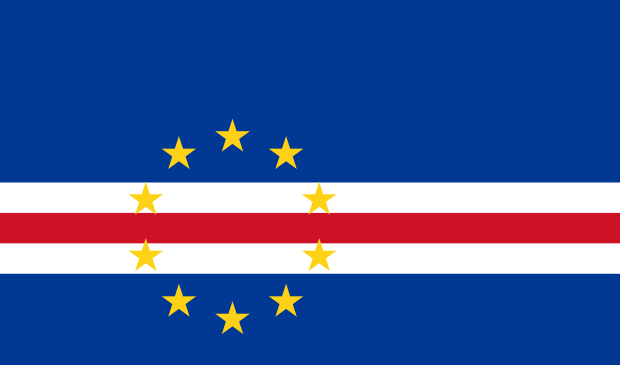
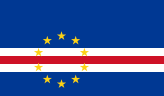
Country flag available in this resolutions
| Icon 32x19 |  |
| Icon 88x52 |  |
Cape Verde
Cape Verde: An Archipelago of Resilience and Rich Heritage
The archipelago of Cape Verde, officially the Republic of Cabo Verde, is a captivating nation located off the western coast of Africa in the central Atlantic Ocean. Comprising a crescent-shaped chain of ten volcanic islands, this island nation is a testament to human resilience, cultural fusion, and a unique geographical destiny. Its isolation has fostered a distinct identity, blending African and Portuguese influences into a vibrant tapestry of music, language, and tradition. From its dramatic volcanic landscapes to its sun-drenched beaches and the warmth of its people, Cape Verde offers a compelling narrative of a nation shaped by its environment, history, and enduring spirit.
Demographics: A Melting Pot of Cultures
The population of Cape Verde, numbering around 593,000 as of recent estimates, is a fascinating product of historical circumstances. The islands were uninhabited when discovered by Portuguese explorers in the 15th century, who subsequently established them as a key hub in the transatlantic slave trade. This history led to a profound demographic shift, with the islands becoming populated by a mix of Portuguese settlers and enslaved Africans brought from various regions of the continent. This confluence of peoples has resulted in a predominantly Creole population, known as „Cabo Verdeans,“ characterized by a rich genetic and cultural heritage. The official language is Portuguese, a legacy of colonial rule, but the everyday language is a Portuguese-based Creole, known as „Cabo Verdean Creole,“ which varies slightly from island to island. This linguistic diversity is a microcosm of the broader cultural mosaic. While the majority of the population identifies as Catholic, reflecting Portuguese influence, there are also smaller communities of Protestants, Muslims, and those who practice indigenous African religions. The society is generally characterized by a strong sense of community and family, with a deep appreciation for music and dance, integral to their cultural expression. Migration has also played a significant role in shaping Cape Verdean demographics. For generations, many islanders have sought opportunities abroad, particularly in Portugal, the United States, and other European nations, leading to a substantial diaspora. This outward movement has contributed to the global spread of Cape Verdean culture, particularly its distinctive music. Despite the challenges of limited resources and geographic isolation, the Cape Verdean people have cultivated a resilient and adaptable society, where a shared history and a vibrant cultural identity bind them together.
Economy: Navigating Challenges and Embracing Opportunities
The economy of Cape Verde has historically been shaped by its geography and colonial past, presenting a unique set of challenges and opportunities. For much of its history, the islands economy was reliant on agriculture, particularly sugarcane, coffee, and bananas, though the volcanic soil and arid climate limited its potential. The pivotal role the islands played in the transatlantic slave trade also contributed to its early economic structure. However, with the decline of traditional agriculture and the rise of globalization, Cape Verde has strategically pivoted towards service-based industries, with tourism emerging as the dominant sector. The archipelagos stunning natural beauty, pristine beaches, and favorable climate have attracted significant international tourism, particularly from Europe. This has led to substantial investment in hotels, resorts, and related infrastructure, creating jobs and generating foreign exchange. Beyond tourism, the fisheries sector also plays a crucial role, providing both sustenance and export revenue. The government has actively sought to diversify the economy, encouraging investment in areas such as renewable energy, particularly wind and solar power, given the archipelagos abundant natural resources. The strategic location of Cape Verde also makes it an attractive hub for maritime services and logistics. However, the economy remains vulnerable to external shocks, such as fluctuations in global tourism demand and rising fuel prices. The nation also faces challenges related to its reliance on imports for many essential goods and its relatively small domestic market. Despite these hurdles, the Cape Verdean government has implemented policies aimed at attracting foreign investment, improving infrastructure, and fostering entrepreneurship. The ongoing development of the country reflects a determined effort to leverage its unique assets and build a sustainable and prosperous future for its people.
Geography: Volcanic Wonders and Atlantic Isolation
The geography of Cape Verde is defined by its volcanic origins and its isolation in the vast expanse of the Atlantic Ocean. The archipelago consists of ten islands and several islets, divided into two main groups: the Windward Islands (Ilhas de Barlavento) and the Leeward Islands (Ilhas de Sotavento). The Windward Islands include Santo Anto, So Vicente, Santa Luzia (uninhabited), So Nicolau, Sal, and Boa Vista. The Leeward Islands comprise Maio, Santiago, Fogo, and Brava. These islands are characterized by dramatic landscapes, ranging from rugged, mountainous interiors to flat, sandy plains and pristine coastal areas. The volcanic nature of the islands is evident in their towering peaks, deep ravines, and fertile volcanic soils, particularly on islands like Santo Anto and Fogo. Fogo, in particular, is home to Pico do Fogo, an active stratovolcano that stands as the highest point in Cape Verde, a constant reminder of the archipelagos fiery genesis. The climate is tropical, characterized by warm temperatures year-round, but with distinct wet and dry seasons. The dry season, from December to June, is marked by trade winds, while the wet season, from August to October, can bring occasional rainfall, though many islands, especially Sal and Boa Vista, are arid and desert-like. The coastline is a prominent feature, with a diverse array of beaches, from the white sands of Sal and Boa Vista to the more rugged, rocky shores of other islands. The surrounding waters are rich in marine life, supporting a vital fishing industry and offering excellent opportunities for diving and water sports. The isolation of the islands has fostered unique ecosystems, with a number of endemic species of plants and animals, making Cape Verde a significant biodiversity hotspot. This dramatic and varied geography is not just a backdrop but an integral part of the Cape Verdean identity, influencing its history, culture, and economy.
History: From Discovery to Independence
The history of Cape Verde is a narrative of discovery, settlement, exploitation, and eventual independence, deeply intertwined with the broader currents of global exploration and colonialism. The archipelago was uninhabited when Portuguese explorers, led by Diogo Dias, first sighted the islands in 1444. Recognizing its strategic potential, the Portuguese Crown soon established settlements, primarily for the purpose of trade and as a stopover point for ships en route to Africa and the Americas. Cape Verde quickly became a crucial hub in the transatlantic slave trade, with enslaved Africans forcibly brought from the African mainland to work on the plantations and serve as domestic labor. This brutal chapter in history left an indelible mark on the islands demographics and culture, shaping the Creole identity of the Cape Verdean people. Over centuries, the islands experienced periods of prosperity tied to the slave trade and later to the production of sugar and salt. However, they also faced significant challenges, including periods of drought, famine, and natural disasters, which often led to mass emigration. The Portuguese colonial administration governed Cape Verde for over five centuries, and while it brought some infrastructure and administrative structures, it also perpetuated economic exploitation. The mid-20th century saw the rise of independence movements across Africa, and Cape Verde was no exception. The African Party for the Independence of Guinea and Cape Verde (PAIGC), co-founded by Amílcar Cabral, spearheaded the struggle for liberation. After a protracted period of political activism and armed struggle, Cape Verde finally achieved its independence from Portugal on July 5, 1975. Since gaining independence, Cape Verde has focused on nation-building, developing its economy, and establishing its place on the international stage. The nation has navigated the complexities of post-colonial development, striving to overcome the legacies of its past and build a prosperous and democratic future. The history of Cape Verde is a powerful testament to the resilience of its people in the face of adversity and their enduring pursuit of self-determination.
Information about country Cape Verde
Automated text translation, excuse errors, please!
Informations are from the publication CIA The World Factbook.
Country Cape Verde is situated in a location / continent Africa. Cape Verde has an area of 4 033 km2 and 523 568 residents. The highest point has a height 2 829 above sea level. and it is called Mt. Fogo. The lowest point is located at the level of 0 above sea level and it is named Atlantic Ocean. System of government is republic and the date of independence July 5, 1975. The capital city is Praia. Cape Verde has the international abbreviation CV.
Cape Verde - economy
Total gross domestic product (GDP) is 2 078 000 000 $. Total gross domestic product per capita in purchasing power parity is 4 000 $. GDP grows by 5.00 % a year. Inflation (consumer price index) is equal to 4.50 % a year. Cape Verde have 196 100 working-age population (from a total population 523 568 people). Unemployment is at 21.00 %. Cape Verde issued 3.90 % GDP to healt care .The public debt of the country is 74.20 % GDP. The total amount of foreign debt is 657 700 000 USD.
Cape Verde - transport and telecommunications
Cape Verde has 1 350 km of roads and 9 airports. There is registered 13 ships.
Number of active mobile phones (sim card) in the country Cape Verde is 396 400. Number of active fixed telephone lines is 74 500. Cape Verde has 150 000 internet users, who have the available 31 Internet connections. Cape Verde has been assigned a domain first Choose range .cv.
Cape Verde - demography
As suggested above, Cape Verde has 523 568 people. Population growth is in the amount 1.43 % per year. Number of children born per 1000 population per year is 21.21.Every mother has average 2.44 children. The infant mortality rate is 26.02 and maternal mortality 79.00 deaths per 100,000 births. Average estimated life expectancy makes 71.00 years. Mortality is 6.28 people per 1000 population per year.
Cape Verde - energetics
Cape Verde consumes a year 257 600 000 kWh of electricity. Annual electricity production is 277 000 000 kWh in power plants with a total installed electrical capacity 89 800 kW. Cape Verde exports 0 kWh and imports 0 kWh of electricity per year Energy mix of power generation is as follows: fossil fuels: 96.9 %, nuclear energy: 0 %, renewable: 3.1 %, hydropower: 0.0 %.
Flags
World flags
World flags
Flags of the World countries
Dále doporučujeme:
Odkazy na partnerské webyTipy na zajímavé weby
Doporučené odkazy na zajímavé weby
Zajímavé webové stránky
Tipy na užitečné weby
 |
 |
 |
 |
 |
 |
 |
 |
 |
 |
 |
 |
 |
 |
 |
 |
 |
 |
 |