Cameroon

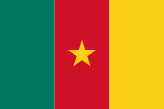
Country flag available in this resolutions
| Icon 32x21 |  |
| Icon 88x59 |  |
Cameroon
Cameroon: A Land of Contrasts and Potential
Cameroon, often referred to as Africa in Miniature due to its remarkable geographical and cultural diversity, is a West African nation situated at the confluence of Central and West Africa. Its varied landscapes, rich history, and complex socio-economic fabric make it a fascinating subject for exploration. From the steamy rainforests of the south to the arid Sahelian plains of the north, Cameroon embodies a microcosm of the African continents immense natural beauty and human dynamism. This article delves into the multifaceted aspects of Cameroon, examining its demographics, economy, geography, and history, painting a comprehensive picture of this intriguing country.
The demographic landscape of Cameroon is as diverse as its terrain. With an estimated population exceeding 27 million people, the country is home to over 250 distinct ethnic groups, each contributing to the nations vibrant cultural mosaic. These groups, speaking a multitude of indigenous languages, are broadly categorized into Bantu speakers in the south and west, and Semi-Bantu or Sudanic peoples in the north. This ethnic complexity has historically presented both a source of strength and a challenge, shaping political dynamics and social interactions. The population is relatively young, with a significant proportion under the age of 15, indicating a high birth rate and a youthful demographic dividend. However, this youthfulness also presents challenges in terms of providing adequate education, healthcare, and employment opportunities. Urbanization is a growing trend, with major cities like Douala and Yaoundé experiencing rapid population growth, leading to increased pressure on infrastructure and resources. Despite the presence of numerous ethnic groups, two official languages, French and English, are spoken, a legacy of its colonial past, reflecting a dualistic administrative and educational system that continues to influence national identity. Migration patterns within Cameroon are also significant, with people moving from rural areas to cities in search of work and better living conditions, and from certain regions to others due to economic opportunities or environmental factors. The country’s religious landscape is also diverse, with a significant Christian population (both Catholic and Protestant) and a substantial Muslim minority, particularly in the north, alongside traditional animist beliefs. This religious diversity, for the most part, coexists peacefully, contributing to the nations pluralistic character.
Economically, Cameroon is a developing nation with a mixed economy, heavily reliant on its natural resources. Agriculture remains the backbone of the economy, employing a large percentage of the workforce and contributing significantly to exports. Major agricultural products include cocoa, coffee, cotton, bananas, and rubber. The country is also rich in mineral resources, with significant deposits of bauxite, iron ore, and timber, which are key contributors to its export earnings. The oil sector, while declining in recent years, has historically been a crucial source of revenue for the government. Despite its resource wealth, Cameroon faces persistent economic challenges, including high levels of poverty, unemployment, and income inequality. Corruption and weak governance have also hampered economic development, deterring foreign investment and hindering the efficient allocation of resources. The informal sector plays a vital role in the economy, providing livelihoods for a large segment of the population, but it often operates outside regulatory frameworks, limiting its contribution to formal economic growth and tax revenue. Efforts are underway to diversify the economy, promote industrialization, and improve the business environment, with a focus on sectors like tourism, telecommunications, and manufacturing. The country’s strategic location and its membership in regional economic blocs like the Economic and Monetary Community of Central Africa (CEMAC) offer potential for increased trade and investment. However, infrastructure development, particularly in transportation and energy, remains a critical bottleneck that needs to be addressed to unlock the countrys full economic potential. The recent discovery of new oil reserves offers a glimmer of hope for renewed economic impetus, but sustainable and inclusive growth strategies are paramount to ensure that these resources benefit the wider population and contribute to long-term development.
Geographically, Cameroon is a land of striking contrasts, earning its moniker Africa in Miniature. Its territory spans approximately 475,442 square kilometers, encompassing a diverse range of ecosystems. The southern part of the country is characterized by dense tropical rainforests, teeming with biodiversity and crisscrossed by major rivers like the Sanaga and Nyong. This region is also home to the countrys highest peak, Mount Cameroon, an active volcano that offers stunning landscapes and trekking opportunities. Moving north, the landscape transitions to savannas and highlands, including the Bamenda Grasslands, known for their fertile volcanic soils and cooler climate. Further north, the terrain becomes drier, eventually giving way to the semi-arid Sahelian plains that border Chad and Niger. The country boasts a long coastline along the Gulf of Guinea, with major port cities like Douala serving as vital hubs for trade and commerce. This diverse geography influences everything from agricultural practices and resource distribution to population settlement patterns and cultural traditions. The varying altitudes and climates have fostered unique flora and fauna, making Cameroon a significant biodiversity hotspot. The countrys natural resources, including its forests and fertile lands, are both a blessing and a responsibility, requiring careful management to ensure their sustainability. The presence of major river systems also provides opportunities for hydropower generation and irrigation, though their full potential is yet to be realized. The northern regions, with their distinct climate and vegetation, have developed unique cultural and economic practices that differ significantly from the southern parts of the country.
The history of Cameroon is a complex tapestry woven from indigenous kingdoms, colonial rule, and post-independence nation-building. Prior to European colonization, the region was home to a variety of organized societies and kingdoms, including the Sao civilization in the north and various Bantu kingdoms in the south. The arrival of European powers in the late 19th century marked a significant turning point. Germany established a protectorate, German Kamerun, in 1884. Following Germanys defeat in World War I, Cameroon was divided into two mandates administered by Britain and France under the League of Nations. French Cameroon became the larger and more populous territory, while British Cameroon was split into two regions, Northern Cameroons and Southern Cameroons. The path to independence was marked by political struggles and a desire for self-determination. French Cameroon gained independence in 1960, and in 1961, Southern Cameroons voted to join the newly independent nation, forming the Federal Republic of Cameroon. Northern Cameroons, however, voted to join Nigeria. The unification process was not without its challenges, and the country eventually transitioned to a unitary state in 1972. The post-independence era has been characterized by a desire for national unity and development, but also by political instability, ethnic tensions, and economic challenges. The Anglophone crisis, which began in 2016, has significantly impacted the countrys stability and development, highlighting the enduring complexities of its colonial legacy and the ongoing quest for equitable governance. The historical narrative of Cameroon is one of resilience, adaptation, and the continuous struggle to forge a unified national identity from its diverse constituent parts. The legacy of colonialism continues to shape its political and economic structures, while the aspirations for a prosperous and peaceful future drive its contemporary trajectory.
Information about country Cameroon
Automated text translation, excuse errors, please!
Informations are from the publication CIA The World Factbook.
Country Cameroon is situated in a location / continent Africa. Cameroon has an area of 475 440 km2 and 20 129 878 residents. The highest point has a height 4 095 above sea level. and it is called Fako. The lowest point is located at the level of 0 above sea level and it is named Atlantic Ocean. System of government is republic and the date of independence First January 1960. The capital city is Yaounde. Cameroon has the international abbreviation CM.
Cameroon - economy
Total gross domestic product (GDP) is 47 860 000 000 $. Total gross domestic product per capita in purchasing power parity is 2 300 $. GDP grows by 4.10 % a year. Inflation (consumer price index) is equal to 2.90 % a year. Cameroon have 8 083 000 working-age population (from a total population 20 129 878 people). Unemployment is at 30.00 %. Cameroon issued 5.60 % GDP to healt care and 1,30 % GDP to army. The public debt of the country is 13.90 % GDP. The total amount of foreign debt is 3 147 000 000 USD.
Cameroon - transport and telecommunications
Cameroon has 51 000 km of roads, 987 km of railway lines and 34 airports.
Number of active mobile phones (sim card) in the country Cameroon is 10 475 000. Number of active fixed telephone lines is 669 000. Cameroon has 749 600 internet users, who have the available 9 553 Internet connections. Cameroon has been assigned a domain first Choose range .cm.
Cameroon - demography
As suggested above, Cameroon has 20 129 878 people. Population growth is in the amount 2.08 % per year. Number of children born per 1000 population per year is 32.49.Every mother has average 4.09 children. The infant mortality rate is 59.70 and maternal mortality 690.00 deaths per 100,000 births. Average estimated life expectancy makes 54.71 years. Mortality is 11.66 people per 1000 population per year.
Cameroon - energetics
Cameroon consumes a year 5 049 000 000 kWh of electricity. Annual electricity production is 5 589 000 000 kWh in power plants with a total installed electrical capacity 1 115 000 kW. Cameroon exports 0 kWh and imports 0 kWh of electricity per year Energy mix of power generation is as follows: fossil fuels: 27.8 %, nuclear energy: 0 %, renewable: 0.0 %, hydropower: 72.2 %. The country Cameroon is harvested annually 61 580 barrels of oil.
Flags
World flags
World flags
Flags of the World countries
Dále doporučujeme:
Tipy na užitečné webyNaše tipy na užitečné weby
Doporučené odkazy
Zajímavé webové stránky
Tipy na zajímavé weby
 |
 |
 |
 |
 |
 |
 |
 |
 |
 |
 |
 |
 |
 |
 |
 |
 |
 |
 |