Burkina Faso
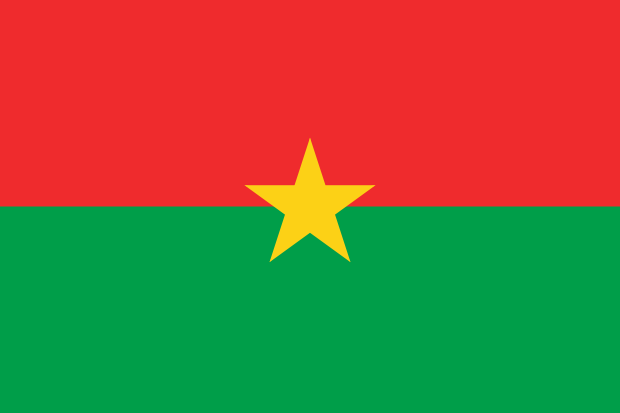
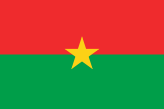
Country flag available in this resolutions
| Icon 32x21 |  |
| Icon 88x59 |  |
Burkina Faso
Burkina Faso: A Land of Resilient People and Untapped Potential
Burkina Faso, a landlocked nation in West Africa, is a country often overlooked on the global stage, yet it boasts a rich tapestry of history, culture, and a people defined by their resilience. The name itself, meaning „Land of the Upright People,“ hints at the character of its inhabitants, who have persevered through centuries of change and challenge. Understanding Burkina Faso requires a deep dive into its demographics, a complex mosaic of ethnic groups, its economy, a delicate balance of agriculture and emerging industries, its geography, a vast expanse of savannas and Sahelian landscapes, and its history, a narrative shaped by ancient kingdoms, colonial rule, and the quest for self-determination.
The demographic landscape of Burkina Faso is characterized by a young and rapidly growing population. With a median age of around 17 years, the country faces the significant challenge of providing education, healthcare, and employment opportunities for its burgeoning youth. The population is ethnically diverse, with the Mossi being the largest group, comprising roughly half of the nations inhabitants. Other significant ethnic groups include the Fulani, Bobo, Gourounsi, and Lobi, each contributing their unique traditions and languages to the national identity. This diversity, while a source of cultural richness, has also, at times, presented challenges in national cohesion and governance. The countrys official language is French, a legacy of its colonial past, but numerous indigenous languages are spoken daily, reflecting the deep cultural roots of its various communities. Urbanization is on the rise, with the capital city, Ouagadougou, and the second-largest city, Bobo-Dioulasso, experiencing significant population growth. This migration from rural to urban areas places additional strain on infrastructure and resources in these centers. The high fertility rate, a common characteristic of many sub-Saharan African nations, contributes to the rapid population increase, necessitating sustained efforts in family planning and resource management.
Economically, Burkina Faso remains one of the worlds least developed countries, heavily reliant on agriculture, which employs the vast majority of the population. The primary crops include sorghum, millet, maize, cotton, and peanuts, with cotton being a significant export commodity. However, this agricultural sector is highly vulnerable to climatic variations, particularly droughts and unpredictable rainfall patterns, which have become more frequent and severe due to climate change. This vulnerability can lead to food insecurity and economic instability. Beyond agriculture, the mining sector has emerged as a crucial contributor to the national economy, with significant deposits of gold, manganese, and phosphate. Gold mining, in particular, has seen substantial growth in recent years, providing much-needed foreign exchange and employment, though concerns about artisanal mining practices and environmental impact persist. The informal sector is also a significant part of the economy, providing livelihoods for many, but often operating outside of formal regulations and contributing little to state revenue. Efforts are underway to diversify the economy, promote small and medium-sized enterprises, and attract foreign investment, but these initiatives face hurdles such as poor infrastructure, limited access to finance, and political instability. Development partners and international organizations play a vital role in supporting Burkina Fasos economic development through aid and technical assistance, focusing on areas like infrastructure development, education, and healthcare.
The geography of Burkina Faso is predominantly characterized by vast, gently rolling plains and savannas, with a landscape that gradually rises towards the west. The country is situated in the heart of West Africa, entirely landlocked, and shares borders with Mali, Niger, Benin, Togo, Ghana, and Ivory Coast. The northern and central regions are dominated by the Sahelian climate, a semi-arid zone that experiences long dry seasons and short, often erratic rainy seasons. This arid environment poses significant challenges for agriculture and water management. Further south, the climate becomes more humid, supporting more diverse vegetation and agriculture. The countrys water resources are primarily supplied by the Niger River and its tributaries, which are crucial for irrigation, drinking water, and transportation in some areas. The landscape is dotted with rock outcrops, known as dogons, which are significant cultural and historical sites. The absence of a coastline means that Burkina Faso relies on its neighbors for access to international trade routes, adding to its logistical complexities. The countrys natural resources, beyond those exploited by mining, include significant forest cover, though deforestation remains a pressing environmental concern driven by agricultural expansion and fuel wood consumption. The vastness of the territory and its relatively low population density in many areas present both opportunities for agricultural expansion and challenges for providing services and infrastructure to all citizens.
The history of Burkina Faso is a long and complex narrative that stretches back millennia. Evidence suggests human habitation in the region dating back to the Paleolithic era. Over centuries, various kingdoms and empires rose and fell across the territory. The Mossi people, who form the largest ethnic group today, established powerful kingdoms in the 15th century, notably the Kingdom of Ouagadougou, which resisted attempts at conquest by neighboring empires like the Songhai. Their sophisticated political and social structures left a lasting legacy. The arrival of European colonial powers in the late 19th century marked a turning point. The French established control over the territory, which became known as Upper Volta, a name reflecting its position on the Volta River. Colonial rule brought about significant changes, including the imposition of new administrative systems, the introduction of cash crops like cotton, and the construction of some infrastructure, primarily to serve colonial economic interests. During this period, resistance to French rule was a constant undercurrent, culminating in various uprisings and movements advocating for greater autonomy. The mid-20th century saw a growing wave of decolonization across Africa, and Upper Volta gained its independence from France on August 5, 1960. The post-independence era has been marked by periods of political instability, including military coups and civilian rule, and the struggle to build a stable and prosperous nation. In 1984, under the revolutionary leadership of Thomas Sankara, the country was renamed Burkina Faso, symbolizing a break from the colonial past and a commitment to self-reliance and pan-Africanism. Sankaras brief but impactful tenure saw significant social and economic reforms, including efforts to combat corruption, improve public health, and promote womens rights, before his assassination in 1987. The country has since navigated a challenging path, striving to overcome its economic vulnerabilities, address internal security threats, and foster democratic governance in a region often marked by political turbulence. The ongoing challenges, from poverty and climate change to regional instability, test the resilience of the Burkinab people, but their spirit, as embodied in their nations name, continues to shine through.
Information about country Burkina Faso
Automated text translation, excuse errors, please!
Informations are from the publication CIA The World Factbook.
Country Burkina Faso is situated in a location / continent Africa. Burkina Faso has an area of 274 200 km2 and 17 275 115 residents. The highest point has a height 749 above sea level. and it is called Tena Kourou. The lowest point is located at the level of 200 above sea level and it is named Mouhoun (Black Volta) river. System of government is republic and the date of independence 5th August 1960. The capital city is Ouagadougou. Burkina Faso has the international abbreviation UV.
Burkina Faso - economy
Total gross domestic product (GDP) is 22 320 000 000 $. Total gross domestic product per capita in purchasing power parity is 1 500 $. GDP grows by 5.60 % a year. Inflation (consumer price index) is equal to 2.80 % a year. Burkina Faso have 6 668 000 working-age population (from a total population 17 275 115 people). Unemployment is at 77.00 %. Burkina Faso issued 6.40 % GDP to healt care .The total amount of foreign debt is 2 335 000 000 USD.
Burkina Faso - transport and telecommunications
Burkina Faso has 92 495 km of roads, 622 km of railway lines and 24 airports.
Number of active mobile phones (sim card) in the country Burkina Faso is 7 682 000. Number of active fixed telephone lines is 141 500. Burkina Faso has 178 100 internet users, who have the available 1 833 Internet connections. Burkina Faso has been assigned a domain first Choose range .bf.
Burkina Faso - demography
As suggested above, Burkina Faso has 17 275 115 people. Population growth is in the amount 3.07 % per year. Number of children born per 1000 population per year is 43.20.Every mother has average 6.07 children. The infant mortality rate is 79.84 and maternal mortality 300.00 deaths per 100,000 births. Average estimated life expectancy makes 54.07 years. Mortality is 12.47 people per 1000 population per year.
Burkina Faso - energetics
Burkina Faso consumes a year 762 500 000 kWh of electricity. Annual electricity production is 664 400 000 kWh in power plants with a total installed electrical capacity 252 000 kW. Burkina Faso exports 0 kWh and imports 144 600 000 kWh of electricity per year Energy mix of power generation is as follows: fossil fuels: 87.3 %, nuclear energy: 0 %, renewable: 0.0 %, hydropower: 12.7 %.
Flags
World flags
World flags
Flags of the World countries
Dále doporučujeme:
Doporučené odkazy a zdroje obsahuNaše tipy na zajímavé stránky
Odkazy nejen na naše partnerské weby
Naše tipy na užitečné weby
Doporučené internetové odkazy
 |
 |
 |
 |
 |
 |
 |
 |
 |
 |
 |
 |
 |
 |
 |
 |
 |
 |
 |