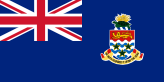
Cayman Islands
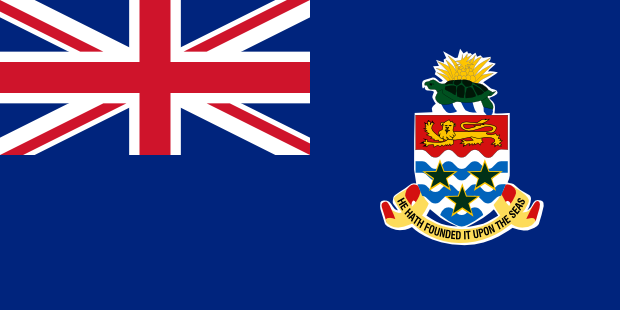
Country flag available in this resolutions
| Icon 32x16 |  |
| Icon 88x44 |  |
Cayman Islands
The Cayman Islands, a British Overseas Territory nestled in the western Caribbean Sea, present a fascinating paradox of natural beauty and sophisticated financial prowess. Comprising three distinct islands – Grand Cayman, Cayman Brac, and Little Cayman – this archipelago is renowned globally for its pristine beaches, vibrant coral reefs, and, perhaps most famously, its status as a leading international financial center. Despite their relatively small size and population, the Cayman Islands wield significant influence in global finance and tourism, drawing a unique blend of residents and visitors to their shores. The islands allure lies not only in their idyllic tropical setting but also in their stable political environment, attractive tax regime, and commitment to upholding high standards of living and business operation. This combination has fostered a prosperous and dynamic society, one that carefully balances its natural heritage with the demands of a modern, globalized economy.
The demographic landscape of the Cayman Islands is as diverse as its economic activities. With a population of approximately 70,000 people, the islands are home to a rich tapestry of nationalities and ethnicities, a testament to their role as a global hub for finance, tourism, and international business. A significant portion of the population comprises expatriates from countries such as Jamaica, the United States, Canada, the United Kingdom, and the Philippines, who are drawn by employment opportunities and the islands’ attractive lifestyle. This multiculturalism is a defining characteristic, fostering a vibrant and cosmopolitan atmosphere. While English is the official language, the diverse origins of its residents mean that a variety of other languages and dialects can be heard throughout the islands. The population is predominantly young, with a relatively high birth rate, and the islands boast a high life expectancy, indicative of their well-developed healthcare system and generally healthy environment. Socially, the Caymanian people are known for their friendliness and hospitality, embodying a relaxed yet efficient island culture. The islands have a strong sense of community, particularly on the smaller islands of Cayman Brac and Little Cayman, where traditions and close-knit relationships remain paramount.
Economically, the Cayman Islands are a powerhouse, punching well above their weight on the global stage. The economy is overwhelmingly dominated by two key sectors: financial services and tourism. The financial services industry is the bedrock of the Caymanian economy, with the islands recognized as a premier offshore financial center. This sector encompasses a vast array of activities, including hedge funds, mutual funds, captive insurance, structured finance, and private banking. The sophisticated legal and regulatory framework, coupled with a favorable tax environment, has attracted a multitude of international financial institutions and corporations. This has led to high per capita income and a high standard of living for its residents. The tourism sector is the second pillar of the economy, drawing hundreds of thousands of visitors annually. Grand Cayman, in particular, is famous for its stunning Seven Mile Beach, a crescent of soft, white sand lapped by turquoise waters, and its world-class diving and snorkeling opportunities around the vibrant coral reefs. Cruise ship tourism is also a significant contributor, bringing a steady stream of visitors eager to experience the islands’ natural beauty and amenities. While these two sectors are dominant, efforts are being made to diversify the economy, with a growing interest in areas such as sustainable energy and niche agricultural products. The government plays a crucial role in managing the economy, ensuring stability and promoting responsible development while also striving to protect the islands unique environment.
The geography of the Cayman Islands is characterized by its low-lying topography and tropical climate. Situated approximately 240 kilometers (150 miles) south of Cuba and 265 kilometers (165 miles) west of Jamaica, the islands are part of the Cayman Ridge, an underwater mountain range extending from the Sierra Maestra mountains in Cuba. Grand Cayman, the largest of the three islands, spans about 35 kilometers (22 miles) in length and 16 kilometers (10 miles) at its widest point. It is a relatively flat island with a maximum elevation of just over 18 meters (60 feet) above sea level. The coastline is a mixture of sandy beaches, mangrove swamps, and rocky shores, with the famous Seven Mile Beach on its western side being the most prominent sandy stretch. Cayman Brac, located about 145 kilometers (90 miles) east of Grand Cayman, is known for its dramatic limestone cliffs, the highest point in the Caymans, reaching approximately 43 meters (140 feet) above sea level. Little Cayman, the smallest and least populated island, lies just west of Cayman Brac and is a haven for nature lovers, boasting pristine natural beauty and abundant wildlife, including a significant population of endangered iguanas. The climate is tropical maritime, with warm temperatures year-round, averaging around 27-30 degrees Celsius (80-86 degrees Fahrenheit). The islands experience a distinct wet season from May to November and a dry season from December to April. The surrounding waters are exceptionally clear, offering unparalleled visibility for diving and snorkeling, with vibrant coral reefs teeming with marine life, including colorful fish, sea turtles, and rays.
The history of the Cayman Islands is a narrative shaped by exploration, settlement, and evolving colonial ties. While Christopher Columbus is credited with sighting the islands in 1503, naming them ‘Las Tortugas’ due to the abundance of sea turtles, permanent settlement did not occur until much later. Early visitors were primarily sailors and buccaneers, attracted by the plentiful turtles, which served as a vital source of fresh meat. The first recorded settlers arrived in the 1730s, predominantly from Jamaica, which was then a British colony. These early settlers established small agricultural communities and continued to rely on turtle fishing. The islands were formally ceded to the British Crown by Spain in the Treaty of Madrid in 1670. For much of their history, the Cayman Islands were administered as part of Jamaica, a relationship that continued until Jamaica gained independence in 1962. At that point, the Cayman Islands opted to become a separate British Crown Colony, a decision that allowed them to forge their own path and develop their unique economic and political identity. The 20th century witnessed a significant transformation, particularly with the development of the financial services industry, which began to gain momentum in the latter half of the century. This shift from a primarily agrarian and fishing-based economy to a global financial hub has been the defining characteristic of modern Caymanian history, attracting international attention and investment, and shaping the islands into the prosperous territory they are today.
The governance of the Cayman Islands is structured as a parliamentary democracy under a constitutional monarchy. The Head of State is the British monarch, represented by a Governor appointed by the Crown. The local government is led by the Premier, who is the head of government and is typically the leader of the majority party in the Legislative Assembly. The Legislative Assembly is the primary law-making body, comprised of elected members representing various constituencies across the islands. The judicial system is based on English common law and is independent of the executive and legislative branches. This robust legal framework is a crucial element underpinning the confidence international businesses have in the Cayman Islands as a financial center. The government places a strong emphasis on maintaining political stability and upholding the rule of law, which are essential for attracting and retaining foreign investment. There is a commitment to transparency and adherence to international standards, particularly in the financial sector, to combat issues such as money laundering and tax evasion. The islands benefit from a well-functioning public service and a commitment to providing essential services to their residents, including education and healthcare. While Grand Cayman is the political and economic heart of the territory, the government also strives to ensure the needs of Cayman Brac and Little Cayman are met, recognizing the unique challenges and opportunities presented by these smaller islands. The islands relationship with the United Kingdom provides a framework of security and international recognition, while also granting a significant degree of self-governance.
Information about country Cayman Islands
Automated text translation, excuse errors, please!
Informations are from the publication CIA The World Factbook.
Country Cayman Islands is situated in a location / continent Central America. Cayman Islands has an area of 264 km2 and 52 560 residents. The highest point has a height 43 above sea level. and it is called The Bluff (Cayman Brac). The lowest point is located at the level of 0 above sea level and it is named Caribbean Sea. System of government is The British Crown Colony.The capital city is George Town (on Grand Cayman). Cayman Islands has the international abbreviation CJ.
Cayman Islands - economy
Total gross domestic product (GDP) is 2 250 000 000 $. Total gross domestic product per capita in purchasing power parity is 43 800 $. GDP grows by 1.10 % a year. Inflation (consumer price index) is equal to 2.00 % a year. Cayman Islands have 39 000 working-age population (from a total population 52 560 people). Unemployment is at 4.00 %. The total amount of foreign debt is 70 000 000 USD.
Cayman Islands - transport and telecommunications
Cayman Islands has 785 km of roads and 3 airports. There is registered 116 ships.
Number of active mobile phones (sim card) in the country Cayman Islands is 95 100. Number of active fixed telephone lines is 37 200. Cayman Islands has 23 000 internet users, who have the available 23 079 Internet connections. Cayman Islands has been assigned a domain first Choose range .ky.
Cayman Islands - demography
As suggested above, Cayman Islands has 52 560 people. Population growth is in the amount 2.24 % per year. Number of children born per 1000 population per year is 12.21.Every mother has average 1.87 children. The infant mortality rate is 6.49 .Average estimated life expectancy makes 80.80 years. Mortality is 5.19 people per 1000 population per year.
Cayman Islands - energetics
Cayman Islands consumes a year 555 600 000 kWh of electricity. Annual electricity production is 593 500 000 kWh in power plants with a total installed electrical capacity 152 600 kW. Cayman Islands exports 0 kWh and imports 0 kWh of electricity per year Energy mix of power generation is as follows: fossil fuels: 100 %, nuclear energy: 0 %, renewable: 0.0 %, hydropower: 0.0 %.
Flags
World flags
World flags
Flags of the World countries
Dále doporučujeme:
Zajímavé webové stránkyTipy na Partnerské weby
Odkazy na zajímavé weby
Zajímavé linky na nejrůznější weby
Doporučené internetové odkazy
 |
 |
 |
 |
 |
 |
 |
 |
 |
 |
 |
 |
 |
 |
 |
 |
 |
 |
 |